
Reviewed · SWAKOPMUND TOURS
From Swakopmund: Living Dunes Experience
The Namib may look empty at first, but this 3.5-hour Living Dunes Experience trains your eyes to spot life in the sand. Guides such as Johnny, Björn, and Immanuel are praised for finding tiny creatures, explaining their survival tricks, and handling them with care. I like the close look at desert wildlife, and I like that the tour ends with a short, faster dune drive. The main drawback is that walking on soft sand can be hard for anyone with limited mobility.
- Search for Namibia’s small desert five: Palmato geckos, sand-diving lizards, tok-tokkie beetles, snakes, spiders, scorpions, and chameleons may appear.
- Learn how desert animals survive: Guides explain tracks, camouflage, heat control, and unusual ways animals find water.
- Reach the dunes quickly: The coastal dune belt lies just beyond Swakopmund, with only a short vehicle transfer.
- Enjoy two kinds of scenery: The wildlife search gives you a close look at the sand, while the final dune drive opens up the wider view.
- Count on an attentive guide: Johnny, Björn, and Immanuel are specifically praised for clear explanations, humor, and careful treatment of animals.
- Plan for sun and soft sand: Bring sunscreen and a hat, and think twice if walking on loose sand is difficult for you.
Why the Empty Namib Is Full of Life
The first surprise is how much can be hiding in a dune that looks like a bare pile of sand. The coastal Namib is home to a remarkable number of species found nowhere else, but most are small, well camouflaged, and built to avoid the hottest parts of the day.
That is why this is not a standard wildlife drive. You are not scanning the horizon for elephants or antelope. You are watching for fine tracks, a small movement under the surface, or the shape of a creature blending into the sand. I like this change of pace. It makes the tour feel more like a lesson in reading nature than a simple animal checklist.
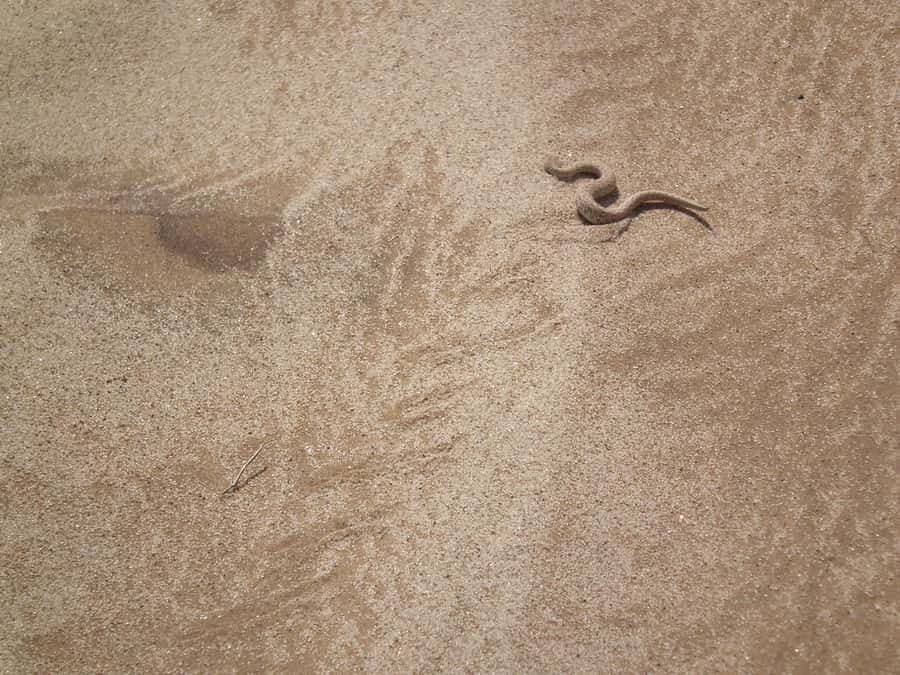
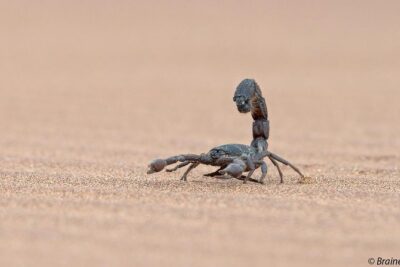
Your guide does the hard work of finding signs of life. The guide may point out a Palmato gecko, a sand-diving lizard, a tok-tokkie beetle, a sidewinder snake, or a chameleon. Spiders and scorpions are also part of the search, though sightings are not guaranteed.
The experience is delivered in English, and the guides named in the feedback, including Johnny, Björn, and Immanuel, are praised for clear explanations and a light touch of humor. That matters here. Without a guide who knows what to look for, you could spend the whole morning staring at sand.
From Your Swakopmund Hotel to the Coastal Dunes
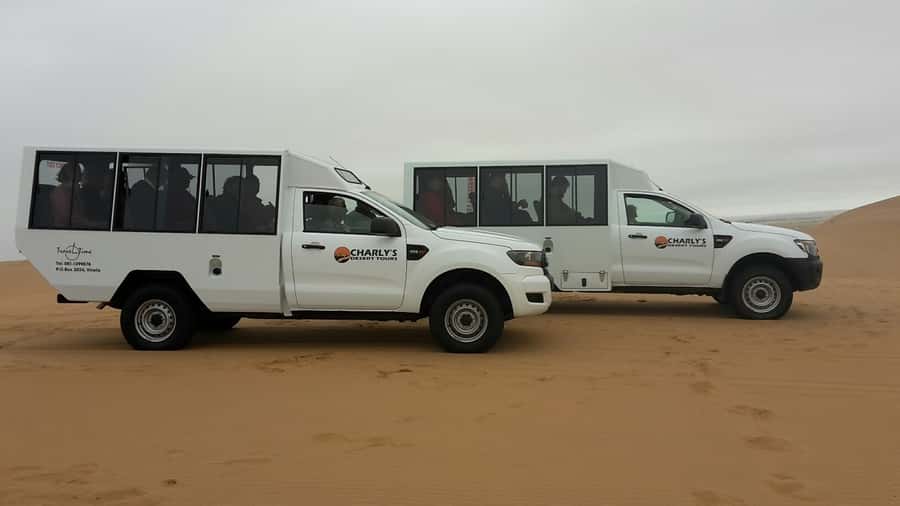
The tour begins with pickup at your accommodation in Swakopmund. The first vehicle transfer takes about five minutes, so you are in the dune belt almost immediately rather than spending much of the outing on the road.
This short ride is useful for more than transport. It lets you watch the town give way to the coastal sand, with desert scenery appearing along the route. The setting is close to Swakopmund, but it feels separate from town once you begin moving among the dunes.
A safety briefing comes before the walking and wildlife search. Pay attention to it, since the guide will be leading you across loose sand and working around small wild animals. You are not visiting a fenced enclosure, so the guide’s instructions help protect both you and the creatures being shown.
Still mineral water is included. Food is not, so do not expect a meal or snack stop during the 210-minute outing. Since the tour lasts three and a half hours, it is sensible to eat before pickup and carry only what you need.
Other Swakopmund days worth booking alongside this:
- Walvis Bay: Marine Big 5 Luxury Catamaran Tour
★ 4.8 · 1,012 reviews - Swakopmund: Desert Dunes Quad Biking with Optional Sandboard
★ 4.9 · 590 reviews - Walvis Bay and Sandwich Harbour Tour
★ 4.8 · 483 reviews
Reading Tracks Instead of Looking for Big Animals
The central part of the experience lasts about three hours and fifteen minutes, including the guided walk, photo stops, safety information, scenic driving, and the wildlife search. The exact order of sightings depends on the conditions and on what the guide finds.
I like the way this format rewards patience. The point is not simply to see a creature placed in front of you. You learn to notice the traces it leaves behind and to understand why it lives where it does.
Your guide may show you how a lizard moves across the sand, how a snake leaves a particular trail, or how a beetle uses the coastal air. The tok-tokkie beetle is especially interesting because it is famous for fog-basking. In a place where water is scarce, even moisture in coastal fog can matter.
The animals have different ways of coping with heat, dryness, and open ground. Some stay below the surface. Some use camouflage. Some move in distinctive ways that reduce contact with hot sand. Some make use of moisture that arrives with the coastal fog.
These details give the tour lasting value. You may not remember every species name, but you will leave with a better sense of how a desert functions. The Namib is not lifeless. It is a place where survival depends on small adjustments and precise timing.
The Creatures You Might See
The wildlife list is unusually strong for such a short trip, but you should treat it as a search rather than a promise of every animal. A skilled guide improves your chances, yet the desert decides what appears.
Palmato geckos
Palmato geckos are among the creatures the guides specifically look for. Their presence shows why an expert eye is useful. Small reptiles can disappear against the sand, and you might miss one even when it is close by.
Same desert coast, a completely different day out:
- Scenic Sandwich Harbour Tour
★ 5.0 · 277 reviews - Scenic Desert Tour by Bike
★ 5.0 · 165 reviews - Sandwich Harbour Adventure: Seals and Sandwich harbour dune drive
★ 5.0 · 165 reviews - Living Desert Eco Dune Tour
★ 5.0 · 113 reviews
Sand-diving lizards
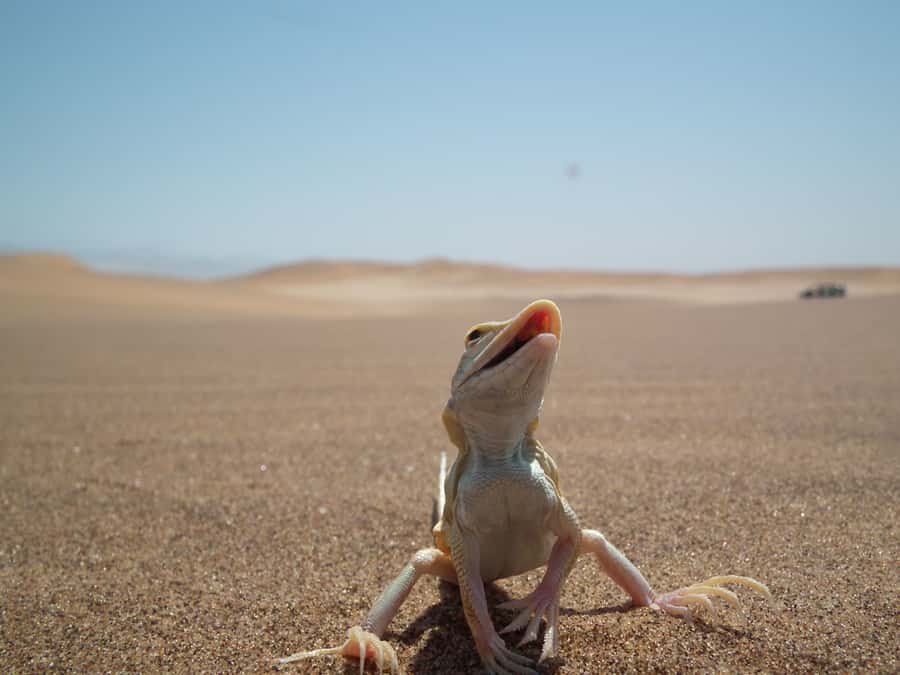
The name tells you something about their unusual behavior. These lizards can move into the sand, making them a good example of how desert animals use the ground itself for protection and temperature control.
Tok-tokkie beetles
The fog-basking tok-tokkie beetle is one of the tour’s most memorable subjects. The guide can explain how its body and behavior help it make use of coastal moisture, a neat reminder that desert survival does not always depend on rainfall.
Sidewinder snakes
Sidewinders leave distinctive tracks and move in a way suited to loose sand. You may learn to identify their trail even before seeing the snake itself. That kind of tracking is one of the most satisfying parts of the tour.
Spiders and scorpions
The search also includes spiders and scorpions. These animals may not be everyone’s favorite photo subject, but they are important parts of the dune system and show how much activity takes place below the obvious surface.
Chameleons
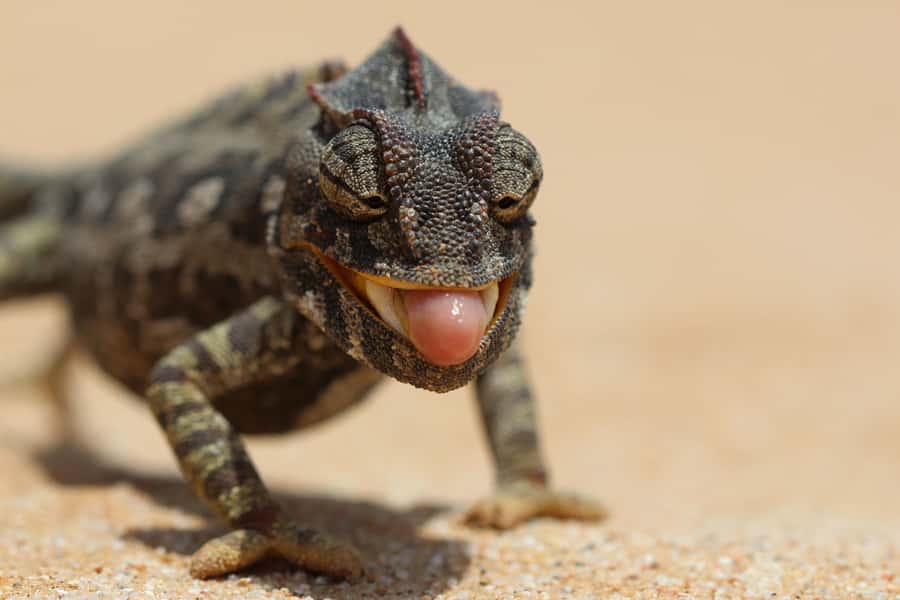
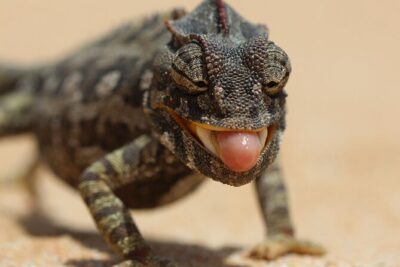
Chameleons add another memorable possibility. Their slow movement and camouflage fit the spirit of the tour: you need to look carefully, and your guide may notice something long before you do.
The Guides Make the Difference
The experience depends heavily on the person leading it. A guide who simply drives you to the dunes and points at whatever appears would not give you the same value. Here, the guide’s skill in locating small animals is central.
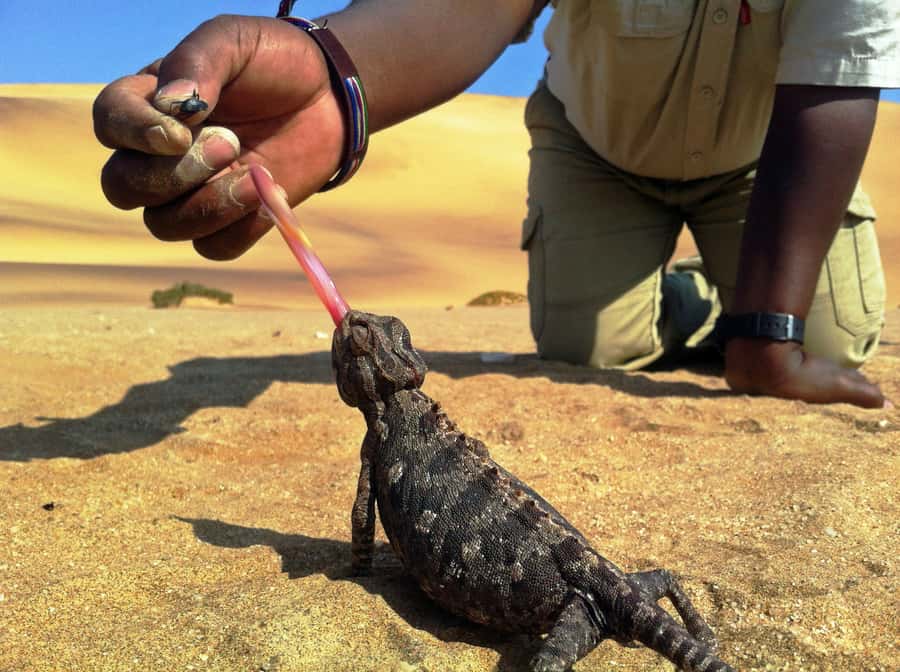
Johnny is praised for finding the small four, explaining each animal neatly, treating them carefully, and adding humor. Björn is praised for showing a great deal and explaining it well. Immanuel is described as both funny and highly capable, with a strong sense of care for Namibia’s natural world.
Those details help you know what kind of guiding to expect. The best part is not just the sighting. It is the explanation that follows: what the animal is doing, why it is suited to the Namib, and how to spot signs of it yourself.
The careful handling of animals is also important. The guide may bring a creature into view for the group, but the stated emphasis is on care. That makes the tour more appealing to you if you want a wildlife experience that respects the animals rather than treating them as props.
Because the tour is in English, you should be comfortable following explanations in that language. The activity data identifies English as the guiding language.
Photo Stops With a Useful Purpose
You will have chances to take photographs, but this is not a sightseeing tour built around constant stops for wide views. The strongest photographs may be close-up images of small reptiles, insects, or tracks, along with the sweeping curves of the dunes.
The guide can help you notice photo subjects that would otherwise blend into the sand. That is a real advantage for anyone interested in nature photography. Still, keep your expectations practical. Tiny creatures can move quickly or remain partly hidden, and the desert setting can make close-up photography tricky.
The scenery itself is worth photographing. The coastal dunes provide clean shapes, changing textures, and broad views with little visual clutter. The short scenic drive adds another angle, giving you a chance to see more of the dune belt without walking every stretch.
Bring a hat and sunscreen. The supplied information does not list camera equipment, snacks, or other gear, so pack according to your own needs without overloading yourself for a walk on soft sand.
The Final Dune Drive Adds Some Speed
After the wildlife portion, the vehicle picks up speed for a short dune drive. This gives the outing a different finish. The first part is careful and slow, with your attention on tracks and tiny movements. The last part lets you sit back and enjoy the shape and scale of the dunes.
The drive lasts about fifteen minutes on the return, while the overall route includes the earlier short transfer from Swakopmund. It is not a full-day 4WD adventure, and you should not book it expecting hours of vehicle-based dune riding.
I see the shorter drive as a good balance. The wildlife walk is the main event, while the vehicle section provides a little excitement and a wider view without taking over the tour. If your priority is high-speed dune action, a longer dedicated dune-driving activity may suit you better. If you want wildlife first and scenery second, this format makes sense.
Is the $61 Price Good Value?
At $61 per person, the tour offers hotel pickup and drop-off, an English-speaking guide, drinking water, the wildlife search, scenic stops, and the dune drive. You are paying for access to a specialist guide’s eyes and experience, not simply for a ride into the sand.
That distinction matters. Without guidance, the coastal dunes can appear empty. With a guide who knows the tracks and habits of the animals, the same area becomes active and interesting. I consider that the main value of the price.
The activity also fits neatly into a Swakopmund schedule. At three and a half hours, it leaves part of the day open for other plans. The five-minute outward transfer keeps the paid time focused on the dunes, and the hotel return removes the need to arrange your own transport.
The limits are clear. Food is not included. There is no stated group size, so you should check availability if the size of the group matters to you. Also, sightings depend on nature, so the value comes from the search, the instruction, and the setting, not from a guaranteed list of animals.
Who Should Book This Swakopmund Tour?
I would choose this for you if you enjoy close observation, unusual wildlife, and guides who explain what you are seeing. It suits people who have already visited Namibia’s larger-animal parks and want a different look at the country’s natural life.
It is also a strong choice if you have only a short stay in Swakopmund. You get a genuine outing beyond town without committing an entire day. The combination of walking, wildlife tracking, photographs, and a short dune drive gives the activity enough variety to hold your attention.
Families and first-time desert visitors may enjoy the sense of discovery, but the mobility warning deserves serious attention. Walking through soft sand can be tiring, and the experience is specifically not suitable for people with mobility impairments.
You should also be comfortable with the possibility that some animals remain hidden. If you need guaranteed sightings or prefer large mammals, this is not the right wildlife activity. If you enjoy the thrill of finding what is easy to miss, it is a much better match.
Practical Details Before You Go
Pickup is included from your accommodation in Swakopmund, and the tour returns you there at the end. The total duration is 210 minutes, with starting times available according to the date you choose.
Bring sunscreen and a hat. Still mineral water is supplied, but food is not. Wear something suitable for sun and walking on sand, though the provided information does not specify a required dress code or footwear.
The activity allows free cancellation up to 24 hours before departure for a full refund. You can also reserve now and pay later, which is useful if your Namibia plans are still shifting.
The experience is operated by Charly’s Desert Tours. English is the stated language, and the tour includes a live guide rather than a self-guided route.
Should You Book the Living Dunes Experience?
Book it if you want to see the Namib as a living system rather than an empty view of sand. The strongest reasons are the guide-led tracking, the unusual small animals, and the explanations of how life survives with so little water.
I especially like the balance between careful wildlife searching and the brief dune drive. The price is reasonable for a pickup-based, guided half-day activity, provided you understand that sightings are not guaranteed and that food is not included.
Skip it if soft-sand walking is a serious problem, or if your main goal is a long, high-speed 4WD ride. For everyone else, this is one of the more distinctive ways to spend a morning or afternoon around Swakopmund.
FAQ
Where does the Living Dunes Experience take place?
The tour takes place in the coastal dune belt just beyond Swakopmund, in Namibia’s Erongo region.
How long does the activity last?
The full experience lasts 210 minutes, or three and a half hours.
Is hotel pickup included?
Yes. Pickup and drop-off are included from your accommodation in Swakopmund.
What language is the tour conducted in?
The live tour guide speaks English.
What animals might I see?
The search may include Palmato geckos, sand-diving lizards, tok-tokkie beetles, sidewinder snakes, spiders, scorpions, and chameleons.
Are animal sightings guaranteed?
No. The tour searches for desert wildlife, but the animals are wild and sightings depend on conditions and what the guide can find.
Is food included?
No. Food is not included, but still mineral water is provided.
What should I bring?
Bring sunscreen and a hat.
Is the activity suitable for people with mobility impairments?
No. The activity is not suitable for people with mobility impairments.
Can I cancel for a full refund?
Yes. You can cancel up to 24 hours in advance for a full refund. You can also reserve now and pay later.
Just added around Swakopmund
- Walvis Bay Shore Excursion: Flamingos, Dune 7, Swakopmund★ 5.0 · 3 reviews
- Unforgettable Half Day Adventure, Explore Sandwich Harbour★ 5.0 · 3 reviews
- Swakopmund Explorer Township Tour in Mondesa with Nande the Township Local Guide★ 5.0 · 4 reviews
- Walvisbay Dune 7 and Swakopmund Town Half Day Guided Tour★ 4.0 · 4 reviews
- Half Day Swakopmund Cultural Historical Township Tour★ 5.0 · 4 reviews
- Spitzkoppe – Day Tour to the Spitzkoppe Mountain from Swakopmund★ 5.0 · 3 reviews
- Full-Day Tour in Namib Desert from Swakopmund, Namibia★ 5.0 · 3 reviews
- 2h30min Explorer Quad Bike Tour★ 5.0 · 6 reviews
Swakopmund Tours, compared.
Desert Dunes Quad Biking with Optional Sandboard
Read our review →
Sandwich Harbour Adventure: Seals and Sandwich harbour dune drive
Read our review →
Browse the lists this tour appears in