
Reviewed · WINDHOEK TOURS
Windhoek: Bushman Walk with the San
The most memorable part of this Windhoek outing is hearing the San explain their traditions in their own click language, then watching the English-speaking guide translate. This is not a staged village built for tourists. It is a small cultural project near the capital, where San people share hunting skills, bush lore, crafts, and stories that are at risk of being forgotten.
I like the close contact with the San guides, who demonstrate rather than simply lecture. I also like the short format: in about two hours, you learn to start a fire, identify useful plants, see how tools and traps work, and try a few words in the click language. The main consideration is that this is a demonstration of an older way of life, not a visit to a remote, fully traditional San settlement.
Key points to know before you book
- Hear the San language first: The guides may speak in their own language before the English explanation, giving you a real sense of how communication works across a language barrier.
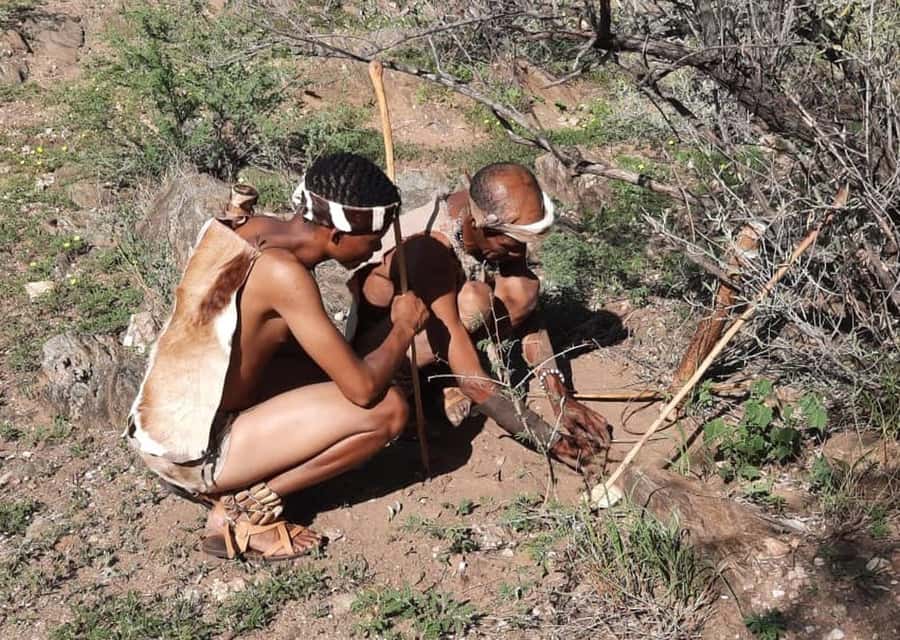
- Learn practical bush skills: Fire making, hunting methods, traps, plant uses, tool crafting, and ostrich egg-shell jewelry form the heart of the walk.
- A useful half-day near Windhoek: The activity fits neatly into an afternoon and avoids a full day of driving into remote parts of Namibia.
- Frans may serve as interpreter: An English-speaking guide such as Frans can translate and add context about San life and present-day pressures.
- Bring protection from the sun: Closed-toe shoes, water, and a hat are sensible. The walk is easy, but the heat can be strong.
- Your booking supports a social project: The activity is run through the Bushmen’s Survival Trust, with income intended to help San participants and their families.
Meeting the San outside Windhoek
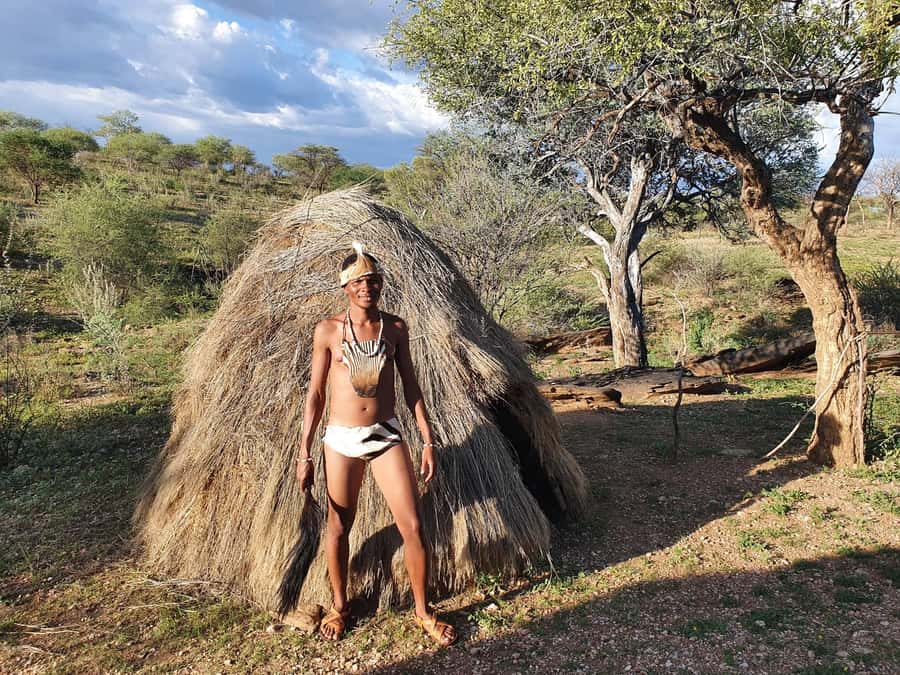
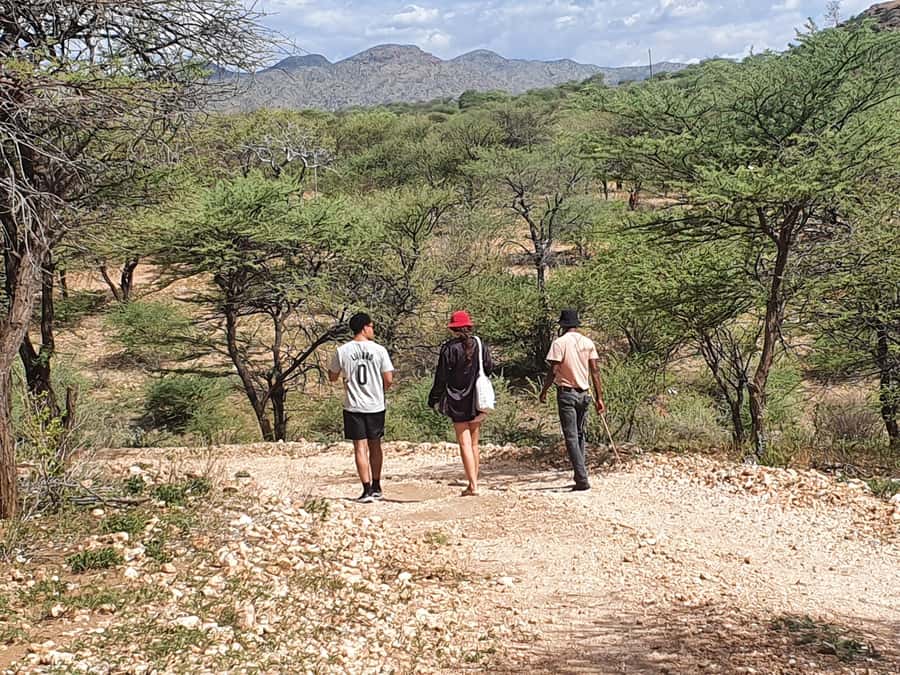
The activity takes place in the Khomas area, at a farm connected with the Bushmen’s Survival Trust. If you drive, you can park near the pool area, where the guide welcomes you. If you choose pickup, wait in your hotel lobby in Windhoek.
That setting matters. You are close enough to the capital for an easy half-day outing, yet far enough from city streets to walk through a natural bush setting. You will not be transported to a distant San village or asked to pretend that modern life has disappeared. Instead, you meet San people who are sharing selected skills and stories in a setting arranged for cultural education.
The first few minutes usually set the tone. You receive a short introduction to the nonprofit work connected with the farm, then meet the San guides and the English-speaking interpreter. On some departures, Frans has acted as the bridge between the group and the San, speaking English, Afrikaans, and his own San language. That language link is one of the strongest parts of the experience.
A few more Windhoek trips to weigh up
- Private Guided Walking Tour with the San in Windhoek
★ 5.0 · 20 reviews - Windhoek: Katutura Township and City Walking Tour
★ 4.7 · 15 reviews - Windhoek : Cheetah walk Experience
★ 4.6 · 8 reviews
Why the click language makes the walk special
Many cultural tours explain a community through a guide speaking English. Here, you may first hear the San guides speak among themselves or address the group in their own language. The interpreter then explains what was said.
This small change gives you a better sense of the San as people with their own way of communicating, rather than as performers repeating a memorized script. You can try a few sounds yourself, and the exchange often becomes playful. You will not master the language in one afternoon, but you will leave with a clearer idea of how much meaning can pass between people even when words are unfamiliar.
The language lesson also leads into a wider subject: the pressure placed on Indigenous cultures by modern life. The guides discuss how traditional skills are being lost and how younger San people can learn them through projects such as this one. That conversation gives the walk more weight than a simple bush skills demonstration.
A bush walk built around useful plants
The walking portion is not a strenuous hike. It is a guided stroll through the bush, with stops for explanations and demonstrations. Expect about two hours for the main walk, although the complete visit may run between two and three hours depending on the schedule and the amount of time spent talking.
The San guides share traditional uses for bush plants, showing how careful observation of the natural world supported daily life. You may learn which plants were useful for food, medicine, tools, or other practical needs. The supplied information does not promise a full plant-identification course, so think of this as an introduction rather than training you could rely on in the wilderness.
I find this part especially useful because it changes the way you look at the scrub around Windhoek. What first appears to be dry, empty bush becomes a place that can provide materials and remedies when you know what to look for. Listen closely, ask questions, and avoid treating the lesson as permission to pick or use plants on your own.
Fire making, traps, and hunting tools
The demonstrations bring the older way of life into focus. You can see how fire is made without modern equipment, and the guides explain how San hunters made and used tools. The activity can include demonstrations of bow and arrow hunting, animal snares, and the use of poison on hunting arrows.
These subjects are presented as traditional skills, not as activities for you to copy independently. The value is in understanding the patience, observation, and practical problem-solving behind them. A trap is not just an object placed in the bush. It reflects knowledge of animal movement and the materials available nearby.
Fire making is a crowd favorite for good reason. It turns an abstract idea about survival into a visible task. You see the process, the effort, and the skill involved. If you are bringing children, the demonstrations offer something concrete to watch, though parents should use their judgment around fire, bows, arrows, and hunting equipment.
Same desert coast, a completely different day out:
- Windhoek: City and Township Tour
★ 4.8 · 430 reviews - Half-Day Windhoek City and Township Cultural Tour
★ 4.5 · 187 reviews - 6-Day Dunes and Wildlife Accommodated Safari from Windhoek
★ 5.0 · 123 reviews - Windhoek City Tour
★ 5.0 · 113 reviews
Ostrich shells, bracelets, and everyday craft
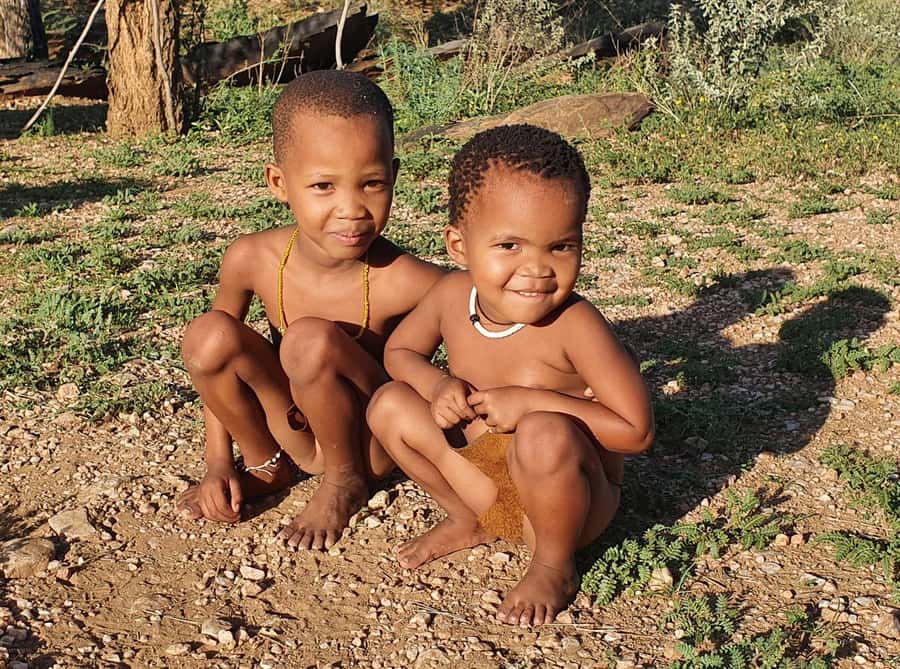
Craft work gives the walk a gentler, hands-on side. The San demonstrate crafting with ostrich egg shells, including small jewelry items such as bracelets. An art gallery on the property sells self-made San jewelry, giving you a chance to see the work in a finished form.
The gallery is not included in the tour price, and purchases are optional. It can be a good place to buy a small souvenir with a direct connection to the people you have met. Ask about prices and payment before choosing something, and remember that the point is to support the makers rather than bargain aggressively over a handmade item.
The craft lesson also helps balance the focus on hunting. San culture is not only about survival in the bush. It includes social customs, family life, storytelling, courtship, and making useful or decorative objects. One memorable custom explained on the walk concerns proposing marriage with a small bow. It is the kind of detail you are unlikely to learn from a general city tour.
Stories, family life, and a changing culture
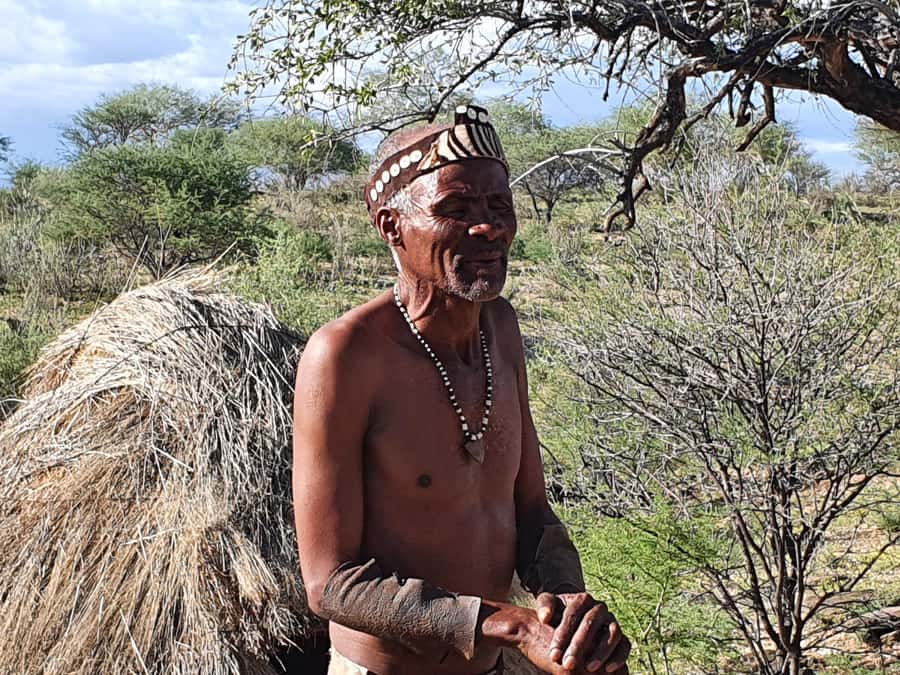
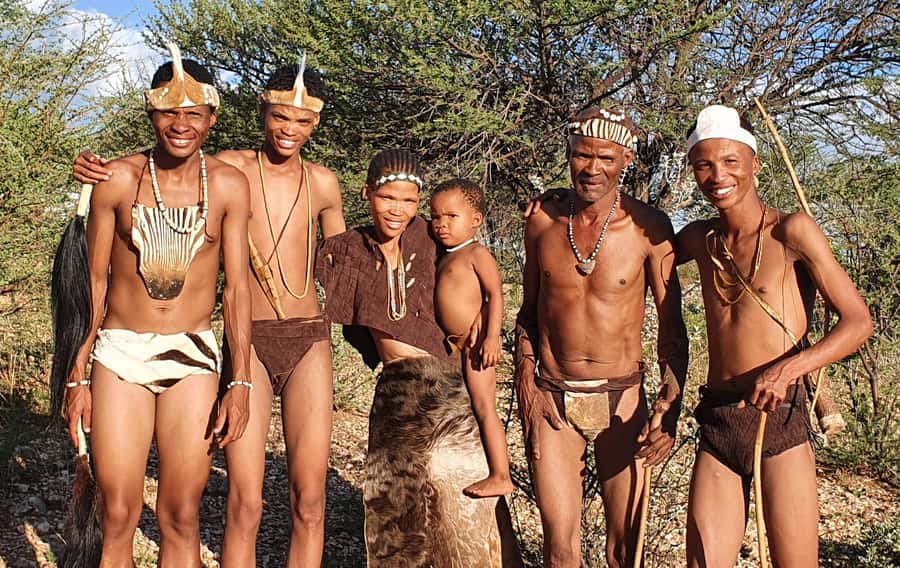
The experience gives you a glimpse of San life both past and present. The San participants may speak about their customs, family, and connection with nature, while the interpreter explains how modern Western life affects their communities.
You should approach this part with respect. The San are not museum pieces, and this is not a chance to judge modern life from the outside. They are living people dealing with economic hardship, cultural change, and the loss of older skills. The project aims to keep those skills alive and give younger generations a chance to learn them.
The atmosphere is generally warm and family-friendly. Children can watch the demonstrations, try language sounds, and take part in the social side of the visit. The walk has also suited solo women, with pickup details and driver information confirmed in advance for some bookings. Still, communication arrangements can vary, so provide your WhatsApp number when asked and confirm the pickup details before the day.
A dance may close the visit. It is often a lively way to finish, but it should be understood as a shared cultural moment rather than a promise of a formal performance every time. The exact flow can depend on the group and the San participants present.
How long the tour really takes
The main guided bush walk is listed as two hours. The total activity is given as two to three hours, allowing for the introduction, meeting the guides, returning from the walk, and time at the property.
Plan your day around two and a half hours rather than assuming you will be gone for exactly 120 minutes. One booking finished in about two hours, leaving the group to wait for its arranged pickup. If you have a tight onward schedule, build in extra time and confirm the start and finish with the operator.
This flexible timing is useful if you have only a short stay in Windhoek. You can fit the walk around a city visit, a flight, or preparations for a longer Namibia road trip. It is also long enough to feel worthwhile without taking an entire day away from other plans.
The $43 price and what you receive
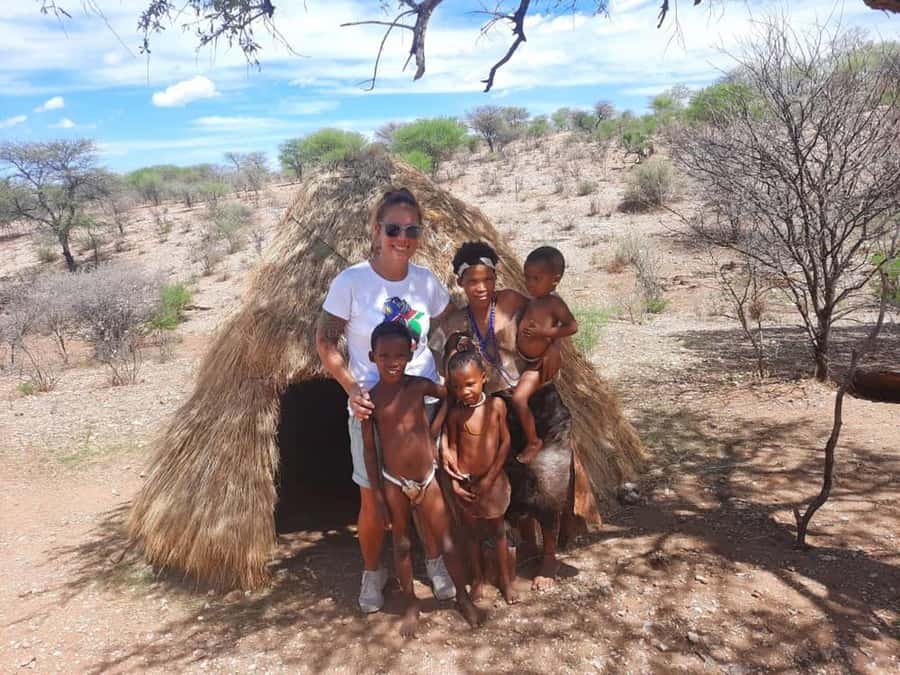
At $43 per person, the walk offers solid value if you want a cultural experience without paying for a full-day excursion. The price covers the two-hour guided bush walk, the introduction to the nonprofit work, and an information sheet about traditional San knowledge.
The strongest value comes from access. You get a direct meeting with San participants, an interpreter, practical demonstrations, and time for questions. The income from the activity is intended to help impoverished San people support themselves, while the project gives younger members a route to learn skills that might otherwise fade.
Pickup and drop-off in Windhoek are included only when you select that option. If you have no car, I would choose the transfer rather than rely on finding a taxi at the end. Directions to the property can be confusing, and there may be no clear sign at the correct turn. Drivers should use the exact meeting information supplied by the operator, then park by the pool area.
Cold drinks are available for 20 Namibian dollars. They are not part of the tour price, so bring water or plan to buy a drink there. A hat, sunscreen, and perhaps an umbrella for shade are sensible additions, especially during hot weather.
Who will enjoy this San cultural experience
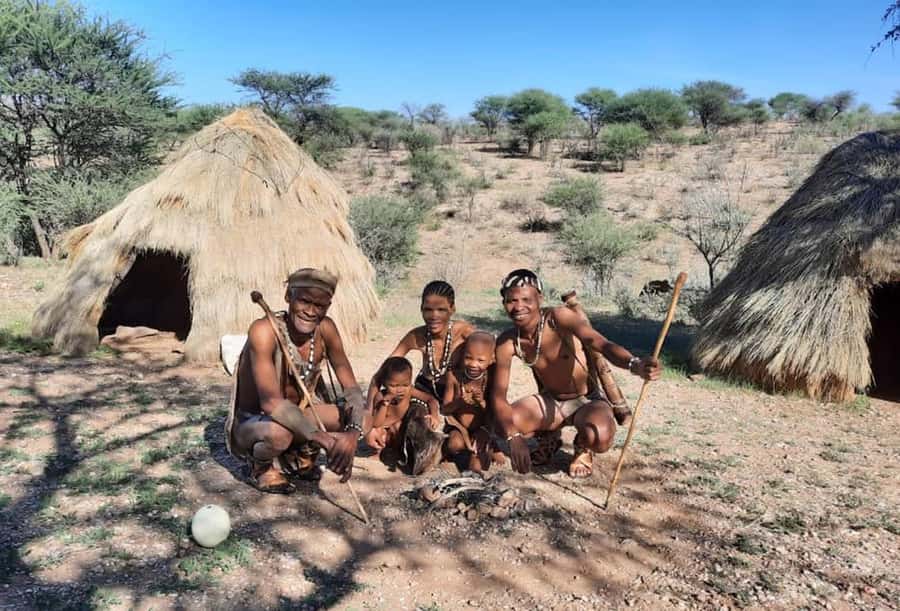
I would recommend the walk to you if you want to learn about an Indigenous culture while staying near Windhoek. It works especially well for:
- First-time visitors who want more than museums and city sights
- Families with older children who enjoy demonstrations and storytelling
- Solo visitors looking for a guided, organized outing
- People interested in traditional hunting, plants, fire making, and craft
- Anyone with a spare half-day before or after a Namibia road trip
The walk is not suitable for wheelchair users. The route is described as easy, but you still need closed-toe shoes and enough comfort for a bush walk. Heat is a practical concern, so carry water and wear a hat.
You should also book with realistic expectations. This is not an untouched village visit, and you will not see every part of San culture in two hours. It is a carefully arranged meeting that shares selected traditions while acknowledging the difficult present-day situation faced by the San.
Small-group feel and guide communication
Small groups are available, and that format is worth choosing if offered. The more personal the group, the easier it is to ask about plants, language, customs, family life, and the meaning of the demonstrations.
English is the listed tour language. The interpreter is important because the San guides explain parts of the experience in their own language first. That arrangement adds time and clarity, but it can also mean that the pace is not as quick as a standard English-only walking tour.
The best approach is to stay curious and patient. Ask a question, listen to the translation, then give the guide time to answer. The experience works through conversation as much as through movement, so it is not ideal if you want a fast-paced attraction with a fixed script.
Practical booking advice for Windhoek
Select hotel pickup if you do not have a rental car. Wait in your hotel lobby, provide a WhatsApp number, and confirm the pickup time and driver details. If you drive yourself, request clear directions before setting out and allow time for the confusing turn near the property.
Wear closed-toe shoes with a firm sole. Add a hat, sunscreen, and a full bottle of water. The bush walk is not described as difficult, but the sun and heat can make a short outing feel longer.
You can cancel up to 24 hours before the activity for a full refund, and the reserve-now, pay-later option keeps your plans flexible. Check the available start times before booking, since the activity lasts two to three hours overall.
Should you book the Bushman Walk with the San?
Yes, if you are looking for a thoughtful cultural experience near Windhoek rather than a remote wilderness expedition. The click language, fire making, plant knowledge, hunting demonstrations, crafts, and personal stories give you plenty to take away from a short visit.
I would be less enthusiastic if you expect a fully traditional San village or a long hike. The setting is arranged for visitors, the duration can be closer to two hours than three, and directions may require care. But those limits are clear once you understand the format.
For most visitors with a spare half-day, the $43 price is fair, particularly when you choose a small group and remember that the project is designed to support San families and preserve older skills. Book the transfer if you lack a car, bring water and a hat, and arrive ready to listen rather than simply watch. This is one of the more meaningful ways to add cultural depth to a Windhoek stay.
FAQ
How long does the Bushman Walk with the San last?
The main guided bush walk lasts about two hours. The full activity takes approximately two to three hours, depending on the introduction, schedule, and time spent at the property.
How much does the experience cost?
The listed price is $43 per person. Hotel pickup and drop-off are included only if you select an option that includes transportation.
What language is the tour conducted in?
The tour language is English. The San guides also speak their own language, and an English-speaking guide or interpreter explains what they say.
Who is the experience provider?
The experience is provided by the Bushmen’s Survival Trust.
Where do I meet the guide if I drive myself?
You can park at the pool area on the property, where the guide will welcome you. Ask for clear directions before driving because the turn can be difficult to find.
Is hotel pickup available in Windhoek?
Yes, hotel pickup and drop-off are available if you select the pickup option. You should wait in your hotel lobby and provide your WhatsApp number for further information.
What should I bring?
Bring closed-toe shoes. Water, a hat, sunscreen, and protection from the strong sun are also sensible, based on the conditions described for the walk.
Is the walk suitable for wheelchair users?
No. The activity is not suitable for wheelchair users.
Can I cancel the booking?
You can cancel up to 24 hours in advance for a full refund. A reserve-now, pay-later option is also available.
Just added around Windhoek
- Windhoek: Katutura Township Tour with Local Guide★ 3.5 · 3 reviews
- Windhoek: City & Township tour. Vehicle, guide, kapana★ 4.2 · 4 reviews
- Predator Encounter: Half-Day Carnivore Feeding Windhoek★ 4.0 · 5 reviews
- Knight Vibes: Bars, Shebeen, Clubs Crawl Windhoek★ 5.0 · 3 reviews
- 3 Day Camping safari at Sossusvlei★ 5.0 · 5 reviews
- Airport Transfers★ 5.0 · 5 reviews
- Discover the Routes of N/a’an ku sê.★ 4.0 · 6 reviews
- 3 Day Camping tour at Etosha National Park★ 5.0 · 5 reviews
Windhoek Tours, compared.
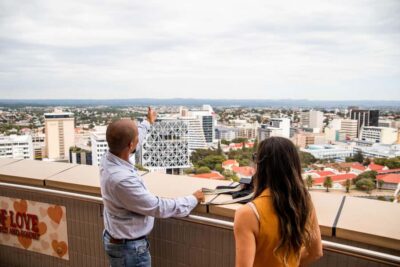

Half-Day Windhoek City and Township Cultural Tour
Read our review →
6-Day Dunes and Wildlife Accommodated Safari from Windhoek
Read our review →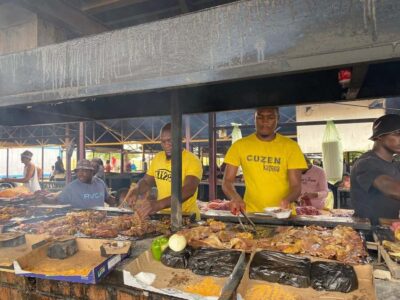

10-Day Namibia Highlights Guided Tour from Windhoek
Read our review →
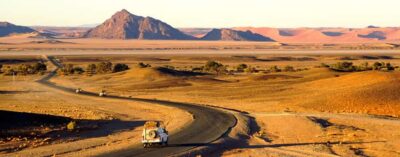
Namibia Self-Driving Audio Guide (in English & German)
Read our review →Browse the lists this tour appears in