
Reviewed · SOSSUSVLEI TOURS
7 Day Southern Namibia and Sossusvlei Camping Safari
The most memorable part of this seven-day southern Namibia safari is how quickly the scenery changes. You go from flamingo-filled wetlands and the Atlantic coast to giant red dunes, an abandoned diamond town, a vast canyon, and a grove of ancient-looking quiver trees. It is a lot of Namibia in one week, and much of it happens from a high-roof safari vehicle with the desert rolling past your window.
I like the practical setup: meals, tents, transport, and a guide are included, so you do not have to organize the difficult pieces yourself. I also like the human scale of the trip. The group is advertised as limited to 12, while the additional tour information gives a maximum of 10, so you should confirm the exact number when booking. Either way, this is intended to be a small-group trip rather than a large coach excursion.
The trade-off is simple: Namibia is enormous, and you pay for this range with long drives and early mornings. The price is about $1,847 per person, which is strong value for seven days of transport, five camping nights, one hotel night, most meals, entrance visits, and guiding, but this is not a restful holiday.
Key things to know before you book
- Pre-dawn Sossusvlei start: You leave camp before sunrise for Dune 45, Dead Vlei, and the best desert light.
- Five nights under canvas: Camping gear is supplied, but you need to bring your own sleeping bag.
- Kolmanskop is a major highlight: The abandoned diamond town gives the trip an unusual historical and photographic stop.
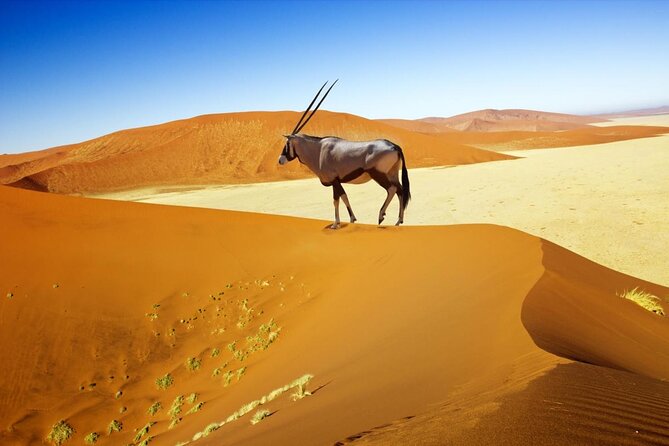
- The south is about scenery first: Fish River Canyon, desert formations, sunsets, and stars matter more here than large-animal sightings.
- Your guide does several jobs: The professional English-speaking guide also drives, cooks, explains the sights, and helps with camp.
- Long final day: The return from the Quiver Tree Forest to Windhoek takes most of the day, and flights are not recommended that evening.
Why this southern Namibia route works
This is a good route for a first look at Namibia because it links the country’s most recognizable southern sights without making you arrange separate hotels, transfers, park visits, and camp equipment. You start in Windhoek and finish there, with pickup and drop-off within the city limits and return airport transfers listed among the inclusions.
The route is not built around a traditional wildlife safari. You may see animals along the way, and one personal account describes plenty of wildlife, but the tour’s main reward is the scenery. The southern part of Namibia gives you huge open spaces, unusual geology, dry riverbeds, coastal towns, abandoned buildings, and skies that make the final night at the Quiver Tree Forest especially appealing.
The vehicle is a custom-built safari vehicle with a pop-up roof. That matters in a hot, dry country. You get a better view than from an ordinary minibus, and the roof can make stops more useful for looking across the open country. Still, pack patience. Driving times are long, and roads between the major sights can make a seven-day schedule feel full.
More Namibia Camping Safaris in Windhoek
- 12 Day Classic Namibia Camping Safari
★ 5.0 · 77 reviews - 3 Day Sossusvlei Budget Camping Safari
★ 5.0 · 62 reviews - 6 Day Sand, Sea & Etosha Budget Camping Safari
★ 5.0 · 36 reviews
Day 1: Flamingos, the Atlantic, and an easy night in Swakopmund
The trip begins at Chameleon Backpackers in Windhoek with a 45-minute pre-departure talk. Departure is listed for 7:00 a.m., so arrange your breakfast and luggage the night before. The route passes through Okahandja, Karibib, and Usakos before reaching the coast.
A first stop is listed at a local crystal market, followed by Walvis Bay Lagoon. The lagoon is a Ramsar wetland and a feeding area for greater and lesser flamingos. Your picnic lunch is taken here, with roughly 30 minutes set aside at the lagoon itself. This is a short stop, but it breaks up the first driving stretch and gives you an early taste of Namibia’s bird life.
You then continue to Swakopmund in the afternoon. The town provides a welcome change from the empty desert, with time to settle into your hotel and walk around on your own. Your first night is the only hotel night included in the standard arrangement, so use it to charge electronics, sort your bag, and enjoy a proper bed.
Dinner is not included on this first evening. A group meal is planned at a seafood restaurant, but you should budget for it. This arrangement gives you a chance to meet the group, though it also means the advertised all-meals idea has one clear exception.
Day 2: Optional sandboarding before the Namib Desert
You have the morning in Swakopmund, with departure no later than 11:30 a.m. That is useful because the town offers optional activities, including sandboarding and quad biking. These cost extra, and the tour does not include them, but the timing gives you a chance to add some action without losing the day’s main route.
Sandboarding is the more distinctive option. The description refers to riding down a dune head first at speeds of up to 60 kilometers per hour. You should treat this as an optional adrenaline activity, not as part of the base tour price. If you prefer a slower morning, walking around Swakopmund is the simpler choice.
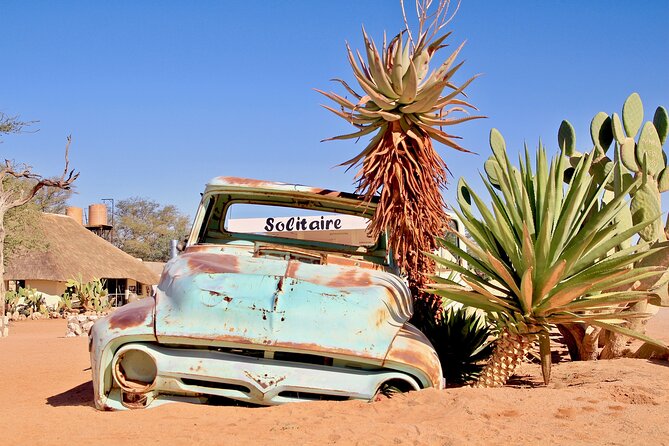
After leaving town, you cross the Namib Desert by way of Kuiseb Pass and the Tropic of Capricorn. There is a short stop in Solitaire for a snack and a leg stretch. Snacks are not supplied, so buy what you need before leaving Swakopmund or at a stop along the route.
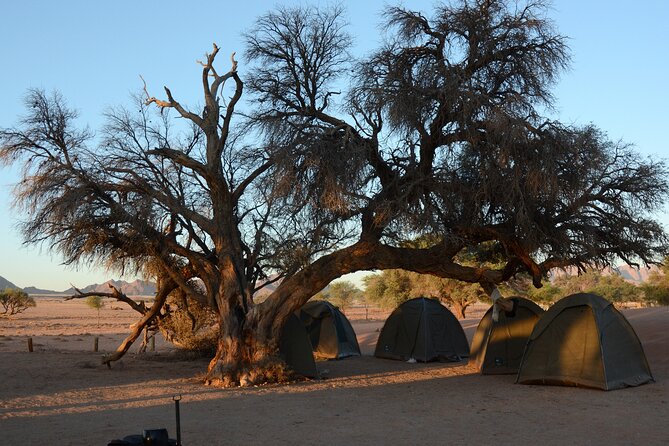
You reach camp near Sesriem late in the afternoon. The setup is basic but pleasant: tents, a pool, and a bar. Your guide prepares dinner, and you can watch the sun drop over the desert before turning in early. An early night is sensible because Day 3 begins before dawn.
Day 3: Dune 45 and the stark beauty of Dead Vlei
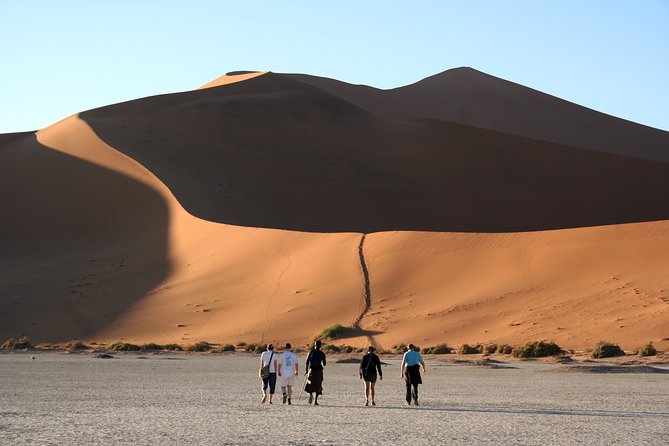
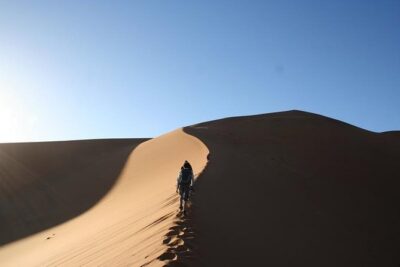
This is the tour’s headline day. The pre-dawn departure gets you to Dune 45 in the cool part of the morning, when the shadows and colors on the sand are at their best. You can climb the dune for sunrise, then return for breakfast.
The climb is not a technical hike, but walking up soft sand is tiring. A moderate level of fitness is recommended, and you should bring sturdy shoes, sun protection, and water. The tour provides tap water, but drinks such as bottled mineral water, soft drinks, and alcohol are not included.
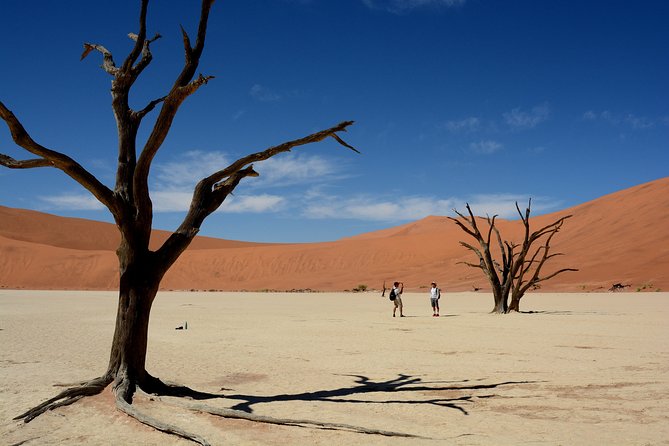
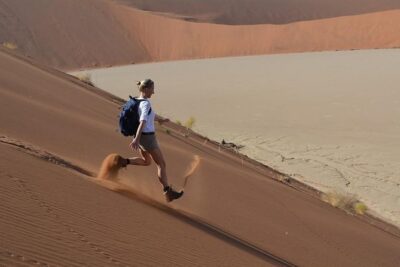
From Dune 45, the route continues into the Sossusvlei area. You explore on foot, then visit Dead Vlei, the famous white clay pan with stark camel thorn trees against tall dunes. The contrast is the reason many people build a Namibia trip around this area: pale cracked ground, blackened tree trunks, and orange-red sand all appear in one frame.
The schedule allows about two hours at Dead Vlei and another hour in the wider Sossusvlei area. That gives you time for photographs and walking, but the heat can become intense later in the day. Bring a hat, sunscreen, and a refillable bottle. This is one day when the early alarm pays off.
You return to Sesriem around lunchtime for food, a swim, or a siesta during the hottest hours. Later, you visit Sesriem Canyon, a narrow formation cut by water through the desert rock. It is a smaller, more enclosed experience after the giant dunes, and it gives the day a useful change of scale.
More Sossusvlei Tours in Windhoek
- 4-Day Swakopmund And Sossusvlei Accommodated Adventure from Windhoek
★ 4.5 · 21 reviews - 9 Day Etosha, Skeleton Coast and Sossusvlei Camping and Lodge Safari
★ 5.0 · 21 reviews - 5-Day Sossusvlei & Sandwich Harbour Photography Tour
★ 5.0 · 13 reviews - 3 Days Amazing Red Dunes of Sossusvlei | Private Guided Tour
★ 5.0 · 10 reviews
Day 4: From red dunes to the Aus mountains
After breakfast, you pack up camp and drive south toward Klein Aus. The scenery becomes broader and more subdued as you leave the Sossusvlei area. This is another major driving day, so keep a book, music, or downloaded podcasts handy, and do not underestimate the value of comfortable clothes.
The camp near Klein Aus is in the Gondwana Sperrgebiet Rand Park. After setting up, you have time for short hiking trails. These walks are unguided, and permits cost extra. This is worth noting because the camp is not simply a place to sleep. If you want a quiet walk among the desert hills, bring suitable shoes and ask about the permit arrangements.
Sunset is a key part of the evening. Dinner is cooked by your guide over an open fire, which is one of the pleasures of this kind of safari. The food is not just a logistical detail. Several accounts specifically praise the cooking, with guides such as Kennedy, Taimi, Gregory, Bronihel, and Ronnie described as capable cooks or helpful camp staff. Your assigned team will vary, but you can expect the guide and camp assistant to carry a large share of the daily work.
Day 5: Kolmanskop, Lüderitz, and a search for desert horses
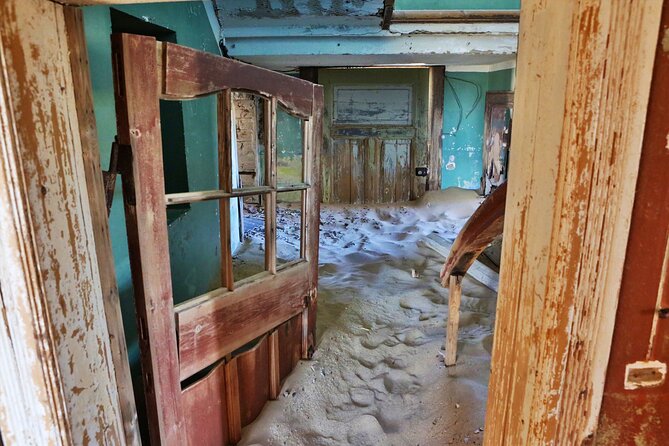
An early breakfast gets you to Kolmanskop, about 15 kilometers from Lüderitz. This abandoned diamond-mining town is one of the most unusual stops on the route. During the diamond boom in 1910, it had luxury homes, a bowling alley, and the first X-ray machine in the Southern Hemisphere. When the diamond industry faded, the town was abandoned and sand began filling the buildings.
Allow yourself time to look closely. The appeal is not only the history but also the way desert sand has entered rooms, stairwells, and windows. The tour includes a guided visit, with about three hours allocated. It is a strong stop for photography, but protect your camera from sand and follow any site rules.
You continue to Lüderitz, a small Atlantic town known for colorful colonial-style buildings and its rocky coastal setting. The town visit is brief, about an hour, so do not expect a long museum program or a slow afternoon by the sea. It is a chance to see a very different side of Namibia, shaped by German colonial architecture and the ocean.
At Diaz Point, you stop at the site of the original Diaz Cross. The visit lasts about 30 minutes. On the return toward Aus, keep watch for the wild horses of the Namib Desert. Their origins remain uncertain, and sightings are not guaranteed. If you see them, treat it as a bonus rather than a scheduled wildlife encounter.
You return to the Aus camp in the middle or late afternoon. There is time to relax before another sunset over the Aus Mountains and another guide-prepared dinner. This second night in the area helps prevent the Lüderitz outing from becoming a rushed day trip.
Day 6: Fish River Canyon and a night beneath southern stars
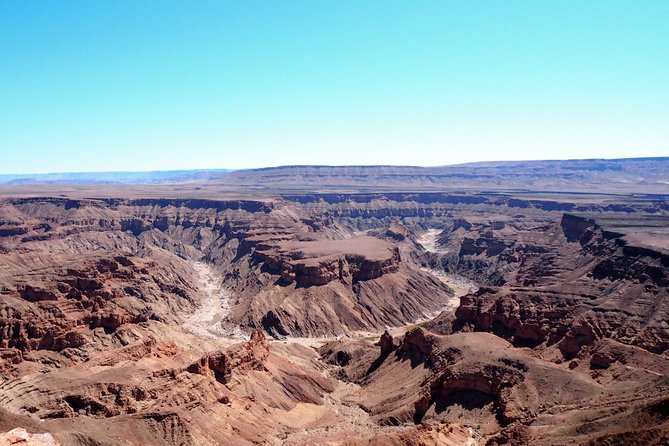
Day 6 begins early again. You pack camp and head east to the Fish River Canyon, stopping at the Hell’s Bend viewpoint. The canyon was formed by water erosion and movements in the earth’s crust over millions of years. From the lookout, the scale is the main event: a wide, broken gorge stretching across dry southern country.
The stop lasts about an hour. That is enough for the viewpoint and photographs, but not for a canyon hike. This distinction matters. You are seeing Fish River Canyon from above, not walking down into it, and the tour is designed to cover several major sights rather than spend multiple days at one place.
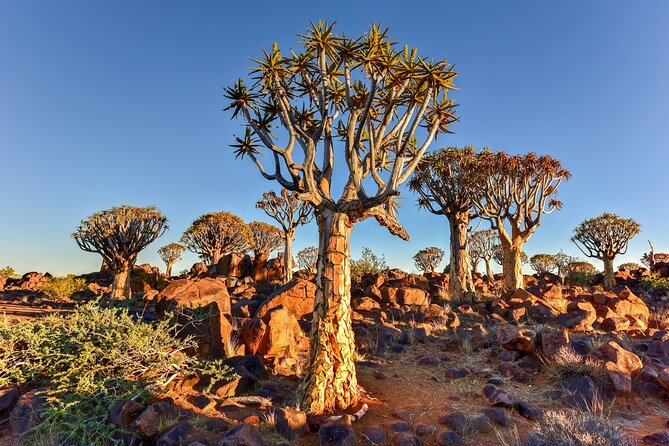
After lunch, you continue toward the Quiver Tree Forest near Keetmanshoop. Around 250 quiver trees grow there, with the oldest estimated at 200 to 300 years. The kokerboom, as it is known in Afrikaans, is Namibia’s national tree, and the forest has been a national monument since 1995.
The final night is spent camping under the stars. This is a particularly good place for night-sky photography, though a special permit is needed for night photography and is not included. Even without specialist equipment, the setting gives you a memorable last evening. Bring warm layers, since desert temperatures can fall sharply after sunset, although the precise overnight conditions vary.
Day 7: Sunrise trees and the long road back to Windhoek
The last morning begins with the Quiver Tree Forest at sunrise. The low light gives the trees a different character from the previous evening, so this is not just a repeat visit. You then begin the long return drive through Mariental and Rehoboth.
A picnic lunch is provided on the route. The driving continues into the afternoon, with arrival in Windhoek expected late in the day. Drop-off is within the city limits, and the activity ends back at the Chameleon meeting point.
Do not schedule a flight for this day. The itinerary specifically advises against it, and that is sensible given the distance and the possibility of delays on the road. Plan a Windhoek night after the safari.
Camping, food, and what to pack
The package includes one night of accommodation and five nights of camping on a twin-share basis. Camping equipment is provided, but a sleeping bag is not. That is the item most likely to catch an unprepared person, so arrange one before departure.
All breakfasts and lunches are included, along with five dinners. The Swakopmund dinner is the exception and must be paid for separately. Tap water is included, while other drinks and snacks are extra.
I would pack light but not too lightly. Bring:
- A sleeping bag suitable for desert nights
- A warm fleece or jacket for early mornings and evenings
- Closed walking shoes for dunes, canyon edges, and camp
- Hat, sunscreen, sunglasses, and a refillable bottle
- Small snacks for long drives
- Dust protection for cameras and phones
- A headlamp or small flashlight for camp
The tour requires moderate physical fitness. The main demands are climbing soft sand at Dune 45, walking around Dead Vlei, handling camp routines, and sitting through long road sections. You do not need to be an athlete, but you should be comfortable with basic outdoor conditions.
Guide quality can shape the whole week
On a camping safari, your guide is also your driver, cook, trip planner, and daily source of information. That makes the staff more important than on a simple sightseeing transfer. The strongest feedback centers on guides who drove safely, explained geology and local history clearly, kept the schedule moving, and helped with tents.
Names associated with especially positive experiences include Kennedy, Simon, Taimi, Gregory, Raymond, Erastus, Michael, Josef, Chilo, and Bronihel. Assignments can change, so do not book based on a particular person unless the company confirms that guide. Still, the pattern is useful: expect a hands-on team, not a guide who simply points out sights from the front seat.
There is also one useful caution. One negative account describes poor communication and planning, but the company response says that complaint concerned a different three-day Sossusvlei trip. I would not treat it as a direct judgment of this seven-day route, but I would still confirm pickup, sleeping arrangements, group size, and optional activity costs before paying.
Is $1,846.99 good value?
At roughly $264 per day, the price is reasonable for a guided Namibia circuit that includes transport, park and site visits, camping equipment, one hotel night, five dinners, six breakfasts, seven lunches, and an English-speaking driver-guide. You also avoid the cost and stress of renting a vehicle and navigating long remote roads yourself.
The value is strongest if you are comfortable sharing a tent and joining a group. It is weaker if you want private rooms, flexible stopping times, or a slower pace. Optional activities, drinks, snacks, the sleeping bag, insurance, and the first-night dinner add to the real cost.
The tour also saves you from arranging separate visits to Sossusvlei, Kolmanskop, Fish River Canyon, and the Quiver Tree Forest. That convenience is the core of the price. You are paying for access, route planning, driving, meals, and camp support as much as for the sights themselves.
Who should book this Namibia safari?
I would choose this trip if you want a broad first visit to southern Namibia and do not want to drive yourself. It suits solo visitors, couples, and friends who enjoy meeting a small group, sharing meals, and accepting a little dust in exchange for dramatic scenery.
It is also a good fit for photographers. Dune 45 at sunrise, Dead Vlei, Kolmanskop, Fish River Canyon, desert horses, sunsets near Aus, and the Quiver Tree Forest all offer very different subjects. Night photography requires an extra permit, so plan for ordinary stargazing unless you arrange that in advance.
I would look elsewhere if your main goal is wildlife. The southern route can produce animal sightings, but the focus is deserts, geological formations, coast, architecture, and open-country views. For a stronger animal-centered trip, you would need a different Namibia route, such as one focused on the north, though that is beyond this experience.
FAQ
Where does the seven-day safari start and finish?
It starts at Chameleon Safaris on Ferry Street in Windhoek, with departure listed for 7:00 a.m. The tour returns to Windhoek and ends back at the meeting point, with drop-off within the city limits.
How many nights are spent camping?
The package includes one night of accommodation and five nights of camping on a twin-share basis. Camping equipment is supplied, but you must bring or arrange your own sleeping bag.
Are meals included?
Six breakfasts, seven lunches, and five dinners are included. Dinner on the first night in Swakopmund is not included, although a group meal is arranged at a local seafood restaurant.
What optional activities are available?
During the free morning in Swakopmund, you can book activities such as sandboarding or quad biking. Optional activities are not included in the tour price. Unguided hiking trails near Klein Aus require permits at an additional cost.
Is the tour suitable for someone with average fitness?
The tour recommends a moderate level of physical fitness. You should be ready for walking in soft sand, climbing Dune 45, visiting Dead Vlei and Sesriem Canyon, managing camping routines, and spending long periods on the road.
Can I take a flight from Windhoek on Day 7?
A flight is not recommended on the final day. The return journey from the Quiver Tree Forest to Windhoek is long, and arrival is expected late in the afternoon.
Should you book it?
Book this safari if you want Namibia’s major southern sights in one well-supported week, and if camping, early starts, and long drives sound like a fair exchange for the experience. The combination of Sossusvlei, Kolmanskop, Fish River Canyon, and the Quiver Tree Forest gives the trip a strong variety.
Before booking, confirm the exact group limit, your assigned sleeping arrangement, the sleeping bag requirement, pickup details, and the extra costs for drinks and activities. If those terms suit you, this is a practical and good-value introduction to southern Namibia, with scenery that keeps changing right up to the final sunrise.
More 7-Day Experiences in Windhoek
- 7 Day Taste of Namibia Lodging Safari
★ 5.0 · 13 reviews - 7 Day – Kalahari TOP attractions
★ 5.0 · 10 reviews
More Safari in Windhoek
- 6-Day Dunes and Wildlife Accommodated Safari from Windhoek
★ 5.0 · 123 reviews - 9 Day Canyons, Dunes & Wildlife Camping and Lodge Safari
★ 4.5 · 23 reviews - From Windhoek: Okapuka Safari Lodge Day Trip
★ 4.4 · 20 reviews - 7 Day Northern Namibia and Skeleton Coast Camping Safari
★ 5.0 · 19 reviews
Just added around Windhoek
- Windhoek: Katutura Township Tour with Local Guide★ 3.5 · 3 reviews
- Windhoek: City & Township tour. Vehicle, guide, kapana★ 4.2 · 4 reviews
- Predator Encounter: Half-Day Carnivore Feeding Windhoek★ 4.0 · 5 reviews
- Knight Vibes: Bars, Shebeen, Clubs Crawl Windhoek★ 5.0 · 3 reviews
- Discover the Routes of N/a’an ku sê.★ 4.0 · 6 reviews
- 3 Day Camping safari at Sossusvlei★ 5.0 · 5 reviews
- Airport Transfers★ 5.0 · 5 reviews
- 3 Day Camping tour at Etosha National Park★ 5.0 · 5 reviews
Sossusvlei Tours, compared.
4-Day Swakopmund And Sossusvlei Accommodated Adventure from Windhoek
Read our review →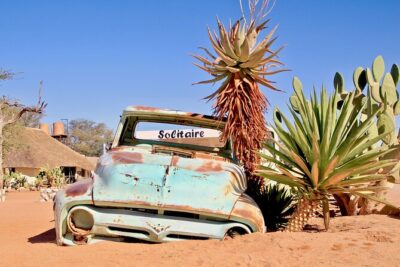
9 Day Etosha, Skeleton Coast and Sossusvlei Camping and Lodge Safari
Read our review →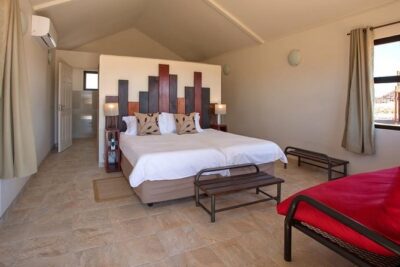
3-Day Sossusvlei Express Accommodated Safari from Swakopmund
Read our review →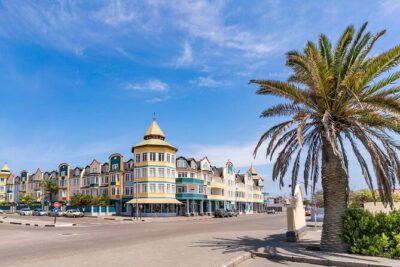
5-Day Sossusvlei & Sandwich Harbour Photography Tour
Read our review →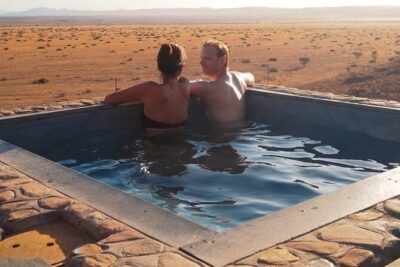
2 Day Scenic Sossusvlei Adventure Tour in Namibia
Read our review →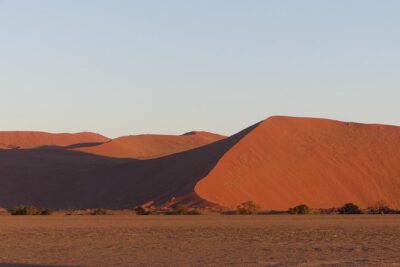
3 Days Amazing Red Dunes of Sossusvlei | Private Guided Tour
Read our review →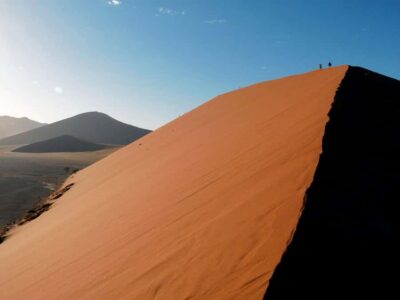
Browse the lists this tour appears in