
Reviewed · WINDHOEK TOWNSHIP TOURS
Katutura Tour – Experience Genuine Namibian Life
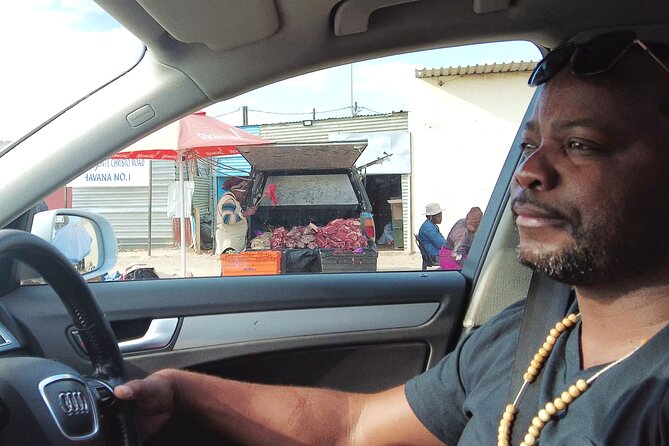
Katutura is not a polished sightseeing district. That is the point. With Kudu Adventures, you ride through Katutura and Havana with a guide who grew up close to the area and can explain what you are seeing beyond the passing view from a car window. The tour can include local food, a shebeen, and conversation with people the guide knows.
I like the small maximum group of eight, which gives you a better chance to ask questions and shape the outing. I also like the custom itinerary: you can focus on food, daily life, viewpoints, or social stops instead of following a fixed script. The main consideration is that this is a community visit, not a tidy attraction with a set performance. Some stops are optional, and the quality of the experience depends on your comfort with an informal, flexible pace.
Key points to know before you book
- Local perspective: Guide Peter, also known as Rasta in one account, shares personal knowledge of Katutura and its communities.
- Four areas in about three hours: The route can include Katutura, Havana, Khomasdal, and Wanaheda.
- Food is part of the appeal: Ask to finish with kapana, freshly grilled meat served at a local street-food spot.
- A lookout adds breathing room: Big Bend provides broad views across Windhoek’s outskirts and surrounding hills.
- Social stops are optional: You can request a shebeen visit for local drinks and conversation.
- Private transport included: You ride in an air-conditioned vehicle, with pickup offered and a maximum of eight people.
Why Katutura gives you a different view of Windhoek
Many first visits to Windhoek stay near Independence Avenue, hotels, craft shops, and formal restaurants. This tour takes you beyond that central frame. Katutura and Havana show another side of the capital, one shaped by working neighborhoods, informal markets, family connections, street food, and everyday routines.
The name Katutura is often translated as a place where people do not want to live. That painful meaning matters when you visit. The district was created during the era of apartheid, when Black residents were forced out of central Windhoek. A visit here should not reduce the area to hardship, though. You will see a living neighborhood, not a museum exhibit.
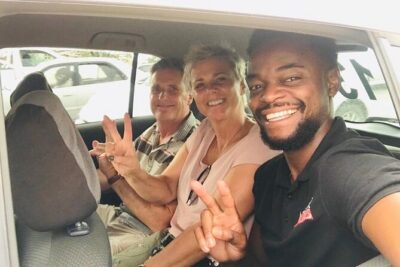
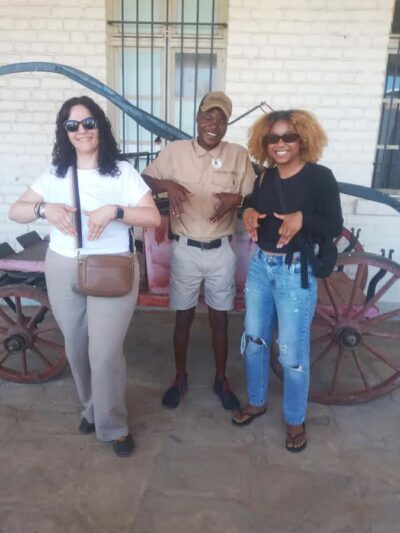
That is where a local guide matters. Peter can explain what you are passing, answer direct questions, and help you read the setting with more care. The strongest part of the experience is not simply driving through unfamiliar streets. It is having someone connect the streets, markets, social life, and past to the Namibia you see today.
I would approach the tour with respect and curiosity. Ask before taking photographs, especially around homes, people, children, schools, or market stalls. You will get more from the visit if you treat it as a chance to meet people, not as a search for dramatic images.
More Windhoek Township Tours in Windhoek
- Windhoek: City and Township Tour
★ 4.8 · 430 reviews - Half-Day Windhoek City and Township Cultural Tour
★ 4.5 · 187 reviews - Katutura – Classic Township Experience
★ 5.0 · 22 reviews
Katutura and Havana, about one hour on the road
The first part takes roughly an hour and focuses on Katutura and Havana. You will travel through the neighborhoods by private vehicle, seeing markets, roadside activity, and the daily movement of local residents. The guide supplies the context as you go.
This format suits you if you want an overview without spending several hours on foot. Windhoek can be hot, and a vehicle makes it easier to cover more ground. The air-conditioned transport is included, and the small group size should make it easier to stop for questions or adjust the focus.
The trade-off is that you may not spend long at any one place. This is a moving introduction rather than a detailed market tour. If you want to buy something, taste food, or speak with someone, tell your guide early. The company presents the route as customizable, so your requests can help shape the time.
Katutura is also the part of the visit where tone matters most. A guide who has friends and family in the area can introduce you with more sensitivity than a standard sightseeing route. Still, the presence of local connections does not make every situation automatically appropriate for visitors. Listen to your guide, follow local courtesy, and allow conversations to happen naturally.
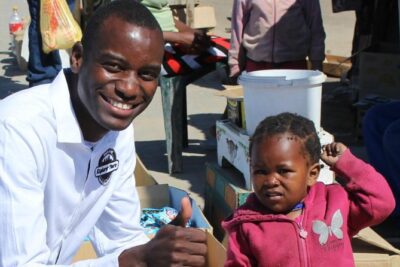
One especially meaningful possibility is a school visit. One person who took the tour had a chance to visit a school and donate pencils. This is not promised as a standard stop, so do not book expecting it. If meeting a school community or bringing simple supplies matters to you, ask Kudu Adventures before the tour rather than arriving with assumptions.
Big Bend lookout, 25 minutes above Windhoek
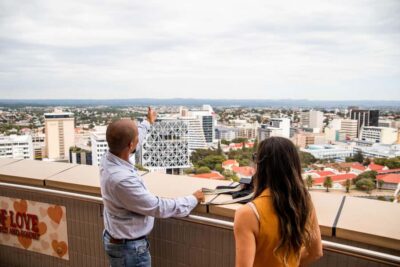
After the neighborhood drive, the route heads to Big Bend for about 25 minutes. Here you can look across Windhoek’s outskirts and the surrounding hills. It is a useful pause after the close-up feel of the townships.
The viewpoint gives you scale. From street level, Katutura and Havana feel immediate and busy. From above, you can see how Windhoek spreads toward the hills and how the city’s different areas relate to one another. Your guide can add local facts and explain what lies beyond the central districts.
Do not expect a major sightseeing monument or a long walk. This is a short lookout stop, and admission is included. Its value is visual and practical: you get time to take in the setting, take photographs where appropriate, and ask questions while the city is laid out in front of you.
I like this break in the rhythm. A township visit can feel intense if every moment is spent moving through streets and markets. Big Bend gives you a quieter interval without losing the connection to the city.
Khomasdal and the optional shebeen stop
The Khomasdal portion can include a visit to a local shebeen, but you need to request it. A shebeen is a traditional Namibian bar and an important social meeting place. Here, you may have the chance to talk with local residents, sample traditional drinks, and learn how these informal establishments fit into community life.
This is one of the most distinctive options on the tour. You are not merely looking at a neighborhood from the window. You may sit in a place where people meet, talk, and relax. If you want a more social experience, tell your guide that this is a priority.
The stop is also easy to misunderstand. A shebeen is not presented as a formal tasting room or a tourist show. The atmosphere may be informal, and alcohol is not included in the tour price. Only people aged 18 and over may take part in alcoholic-drink activities.
You can ask about nonalcoholic options if you prefer not to drink, but the supplied details do not specify what will be available or how much drinks cost. Keep your expectations open and let the guide advise you on what is suitable.
For solo visitors, this option can add warmth to the experience. One solo participant felt comfortable with Peter and appreciated his willingness to share stories. That does not guarantee that every person will feel the same, but a private or very small group gives you a better setting for a relaxed conversation than a large coach tour.
Same desert coast, a completely different day out:
- Windhoek: Bushman Walk with the San
★ 4.9 · 145 reviews - 6-Day Dunes and Wildlife Accommodated Safari from Windhoek
★ 5.0 · 123 reviews - Windhoek City Tour
★ 5.0 · 113 reviews - 10-Day Namibia Highlights Guided Tour from Windhoek
★ 5.0 · 78 reviews
Wanaheda kapana, the tour’s best food stop
The final main stop is in Wanaheda, where you can request kapana and drinks. Kapana is a popular Namibian street-food experience based on freshly grilled meat, often served in a lively local setting. You can pair it with a Namibian beer or another alcoholic drink if you choose.
For me, this is the clearest reason to customize the tour around food. A restaurant meal can be excellent, but kapana lets you see how food works as part of public life. The grill, the shared setting, and the chance to eat alongside local people make the stop more than a quick snack.
The details are intentionally loose. The tour does not state a fixed menu, portion size, food price, or exact kapana vendor. Your guide can help you choose what to try and explain the setting. Since drinks are excluded, bring a payment method that works locally and ask about prices before ordering.
You should also tell the guide about food preferences or limits when booking or at the start. The available information does not promise vegetarian choices, allergy accommodations, or a particular cut of meat. The stop centers on grilled meat, so it may not suit every diet.
The food stop usually works best when you are willing to try something new without expecting a polished restaurant service. It is a local eating experience, and that means the setting may be simple. In exchange, you get a closer look at one of Namibia’s everyday pleasures.
What the $40.47 price really covers
At $40.47 per person, the tour sits at a reasonable price for a three-hour private-transport experience, especially if you are traveling with one or two companions. The fee covers an air-conditioned vehicle and private transportation. It does not cover alcoholic beverages, and the supplied details do not state that food is included.
The real value lies in access and interpretation. You are paying for a local guide, transport across several parts of Windhoek, a flexible route, and the chance to connect with people through the guide’s local relationships. If you tried to arrange all of that alone, you might save money, but you would lose the local introduction that makes the visit more useful and respectful.
Value changes with group size. A solo visitor pays the full per-person rate but gets a personal setting and the ability to ask many questions. Two or three people can share the experience while keeping it intimate. A group of eight may find the rate attractive, though the conversation will naturally be less personal than it is with only one or two guests.
I would budget extra for kapana, drinks, and any other purchases. The tour’s advertised price is not an all-inclusive food package. That is not a problem, but you should know the difference before you go.
Timing, pickup, and the small-group format
The activity lasts about three hours and begins at the Avani Windhoek Hotel and Casino, at the Gustav Voigts Centre on Independence Avenue. Pickup is offered, but confirm the arrangement when you book. The tour ends back at the meeting point.
Operating hours are listed as 9:00 a.m. to 5:00 p.m., Monday through Sunday, for the stated operating period. The exact departure time should be confirmed at booking. Since the route is customizable, your available time may affect which stops fit comfortably.
The maximum group size is eight. That is small enough for direct conversation and easier movement than a large bus tour. It also matters at food or social stops, where a compact group is less intrusive.
Confirmation arrives at booking, and most people can participate. The activity requires a minimum number of participants, so a cancellation for that reason may lead to another date, another experience, or a full refund.
Free cancellation is available up to 24 hours before the start time. If you cancel or change the booking within 24 hours, you should not expect a refund. The cut-off follows local Windhoek time.
Who will enjoy this tour most
I would recommend this experience to you if you want to understand Windhoek beyond its central hotels and standard city sights. It suits curious visitors who prefer conversation, local food, and context over a list of monuments.
It is especially useful for:
- First-time visitors to Windhoek who want a wider view of the capital.
- Solo visitors who value a guide and a small setting.
- Food-focused visitors who want to try kapana.
- Culturally curious visitors who are comfortable with informal community settings.
- Small groups that want to request a specific route or stop.
You may prefer another activity if you want a tightly timed schedule, formal attractions, or guaranteed access to specific sites. This tour is flexible by design. That can be its strength, but it also means the final experience depends on your requests, the guide’s judgment, and what is practical on the day.
Simple ways to get more from the experience
Tell Kudu Adventures what matters to you before departure. If you want kapana, a shebeen, a school visit, local markets, or more time for questions, say so clearly. The itinerary can be adjusted for preferences and time limits.
Wear practical clothing and bring water, though the supplied information does not specify a dress code or included refreshments. Keep your phone ready for photos, but ask permission first. A few respectful questions will usually take you further than trying to record every moment.
I would also avoid treating poverty as entertainment. Let the guide explain the social setting, and do not assume that an informal neighborhood means people want to be photographed. Your attitude will affect the quality of every interaction.
Should you book the Katutura Tour?
Book it if you want a personal introduction to Katutura, Havana, and other Windhoek communities, with the chance to add kapana or a shebeen. Peter, also known as Rasta in one account, appears to be a central part of the experience, and the small group format gives his local stories room to matter.
The strongest reasons to go are the guide’s personal connection, the flexible route, the local food option, and the chance to see a side of Windhoek that a central-city visit will miss. The main caution is simple: this is not a polished attraction with every detail fixed in advance.
At $40.47, the tour offers fair value if you use its flexibility. Ask for the stops you care about, keep extra money for food and drinks, and arrive ready to listen. If that sounds like your kind of Windhoek experience, this is a worthwhile three-hour addition to your stay.
FAQ
How long does the Katutura Tour last?
The tour lasts approximately three hours, including the drives and stops in Katutura, Havana, Big Bend, Khomasdal, and Wanaheda.
Where does the tour start and finish?
It starts at the Avani Windhoek Hotel and Casino, Gustav Voigts Centre, 129 Independence Avenue, Windhoek. The activity ends back at the meeting point.
Is pickup available?
Yes, pickup is offered. Confirm the exact pickup arrangement when booking.
What is included in the price?
The price includes private transportation in an air-conditioned vehicle. Alcoholic beverages are not included.
Can the itinerary be changed?
Yes. The itinerary can be customized according to your preferences and time limits. You should tell your guide about specific requests or adjustments.
Is there a minimum age for alcoholic drinks?
Yes. Alcoholic-drink activities are only for people aged 18 and over.
Just added around Windhoek
- Windhoek: Katutura Township Tour with Local Guide★ 3.5 · 3 reviews
- Windhoek: City & Township tour. Vehicle, guide, kapana★ 4.2 · 4 reviews
- Knight Vibes: Bars, Shebeen, Clubs Crawl Windhoek★ 5.0 · 3 reviews
- Predator Encounter: Half-Day Carnivore Feeding Windhoek★ 4.0 · 5 reviews
- 3 Day Camping safari at Sossusvlei★ 5.0 · 5 reviews
- Airport Transfers★ 5.0 · 5 reviews
- Discover the Routes of N/a’an ku sê.★ 4.0 · 6 reviews
- 3 Day Camping tour at Etosha National Park★ 5.0 · 5 reviews
Windhoek Township Tours, compared.
Half-Day Windhoek City and Township Cultural Tour
Read our review →
Swakopmund Best Cultural Historical Township Tours Namibia
Read our review →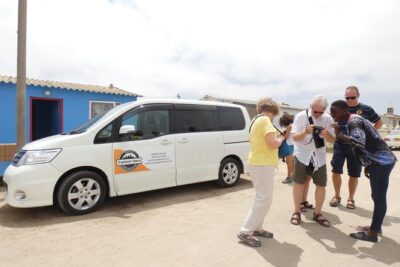
Local Guided Walvisbay & Swakopmund Township Experience Day Tour
Read our review →Browse the lists this tour appears in