
Reviewed · WINDHOEK TOWNSHIP TOURS
Explorer Historical Private Township Cultural Tours
Mondesa Township is best understood on foot, with its streets, homes, market, sidewalk cooking, taverns, schools, and community projects providing the setting. This private tour puts you beside a local guide, rather than behind a bus window, and adds a home-cooked meal and live choir performance.
I like the personal scale of a private outing for up to two people, and I like the chance to learn Damara click sounds instead of merely hearing a short lecture about Namibia’s tribes. The visit to a family home and the local beer stop also give the tour a more human feel.
The main caution is timing. One review describes a late pickup and a three-hour tour instead of the advertised five hours, while the current tour details put the duration at about four hours. Confirm the pickup time and expected finish before setting up another activity.
Key points to know before booking

- Meet guide Nande in Mondesa: Your local guide leads the walk, market visit, cultural stops, and conversations with residents.
- Learn Damara click sounds: The tour includes a hands-on lesson in the click language associated with the Damara people.
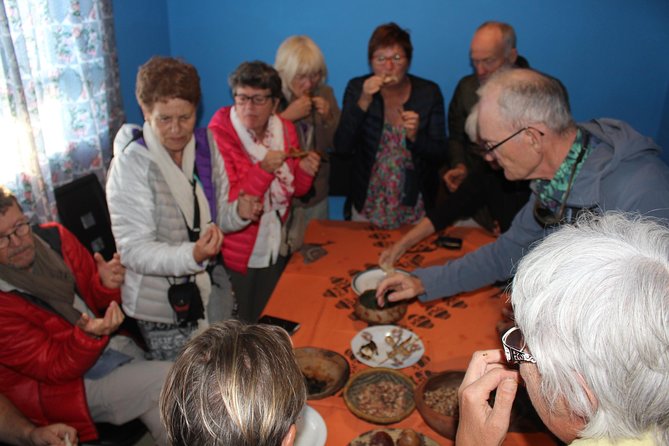
- Eat at a family home: A local meal is prepared and served as part of the visit, giving you a direct look at home cooking.
- Finish with Mondesa music: A local choir performance provides the closing moment rather than a simple drop-off.
- Private pricing favors pairs: The $120 price covers a group of up to two people, with pickup around Swakopmund included.
- Expect an active half-day: Walking through township streets requires a moderate level of fitness.
Why Mondesa is the heart of this Swakopmund tour
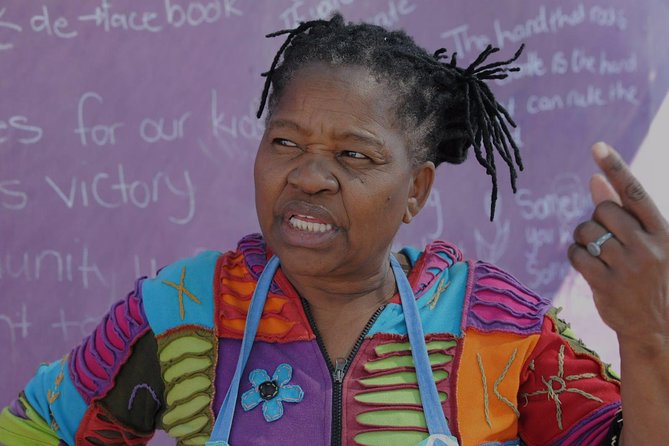
Swakopmund is often presented through its German colonial buildings, oceanfront hotels, and nearby desert activities. Those are part of the town, but they tell only one side of Namibia. Mondesa, a community of Swakopmund, brings you closer to the people and cultures that shape the country today.
This outing introduces you to several Namibian communities, including the Ovambo, Damara, Herero, and Ovahimba. The aim is not simply to memorize tribal names. You get a chance to connect customs, language, food, clothing, music, and daily life through actual places and people.
I like that the tour is built around ordinary community settings. You walk the streets, see children at play, smell food cooking outdoors, and stop at places where residents meet. That can feel more immediate than a formal museum, though it also asks you to behave thoughtfully. You are entering someone’s neighborhood, not a staged attraction.
The best approach is to remain curious without treating the community as a photo backdrop. Ask before photographing people, especially children, and follow your guide’s lead at homes, schools, and kindergartens. The tour information suggests bringing sweets for children, but it is sensible to check with Nande first and hand anything over only with the adults’ approval.
More Windhoek Township Tours in Swakopmund
- Swakopmund: Mondesa Township Day Tour Experience
★ 3.8 · 25 reviews - Swakopmund Best Cultural Historical Township Tours Namibia
★ 5.0 · 8 reviews - Explorer Private Cycling Township Tours
★ 3.9 · 5 reviews
Starting with pickup and a walk through Mondesa
Pickup is offered from accommodations in and around Swakopmund. The listed start time is 10:00 a.m., and morning and afternoon departures are available, giving you some flexibility when arranging the rest of your day.
The drive from your accommodation is not the main event. It is useful because it removes the need to find your own way to the township and lets your guide begin the cultural conversation from the start. Since the tour is private, you can ask questions as you go instead of waiting for a large group to catch up.
Once in Mondesa, expect walking on neighborhood streets. The tour description points to homes, children at play, sidewalk barbecues, and everyday activity. These details are small, but they are exactly what gives the visit its value. You see how the area functions as a place where people live, work, gather, and raise families.
The walking portion also has limits. This is not a polished sightseeing route with a fixed display at every stop. Some moments will depend on who is available, what is happening that day, and how much conversation develops. That is part of the trade-off for a community-based tour.
Wear comfortable shoes and be ready for a moderate amount of walking. The exact surface and pace are not specified, so anyone with mobility concerns should ask the provider before booking.
Open Market: food, photographs, and a closer look at daily trade
The open market gives you one of the clearest ways to see daily commerce in Mondesa. Nande guides you through the market, where you can take souvenir photographs and observe the food and goods being sold.
This stop is useful because markets explain a place through action. You are not just told what people eat or sell. You can see the produce, cooking, handmade goods, and social exchanges that make up a normal day. Your guide can also help explain what you are looking at, which matters when an unfamiliar food or custom needs context.
Local food is part of the experience. The tour specifically mentions mopane worms, a food associated with parts of southern Africa. You may have the chance to see or taste them, but the available details do not guarantee a particular dish at the market or family meal. If you have allergies or strong food restrictions, discuss them before departure.
Photography deserves care here. The tour includes opportunities for souvenir photos, but a market is a working place. Ask before photographing vendors, homes, and children. A friendly request, followed by respect for a no, will make the encounter better for everyone.
Tribes, language, and the meaning of Ubuntu
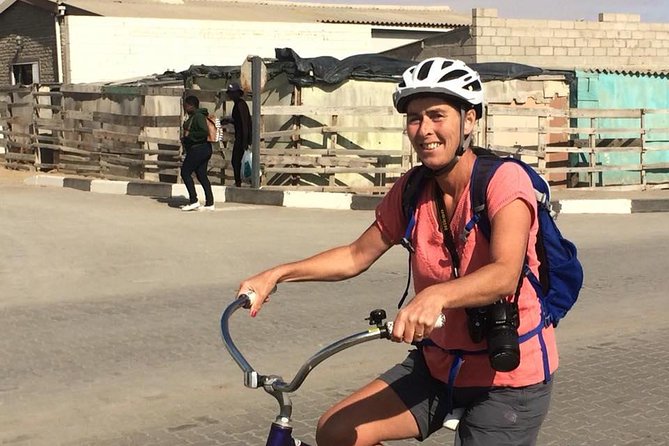
The cultural teaching covers Ovambo, Damara, Herero, and Ovahimba traditions. The precise balance of time among these subjects is not set out, so you should see the tour as an introduction rather than a full ethnographic course.
The most distinctive lesson is the Damara click language. You are taught how to produce the famous click sounds and practice them with your guide. It is a short language lesson, not a route to fluency, but it gives you something active to do and a better sense of how sound and meaning can differ from English.
You also learn to say Uuharapo. The tour connects these language lessons with the idea of Ubuntu, a word often associated with shared humanity and community. Here, the concept matters because the visit is built around meeting people rather than checking off monuments.
I appreciate this hands-on method. It makes the cultural material easier to remember, and it encourages you to participate instead of remaining a silent observer. Still, a short tour cannot explain every difference between the groups named. Listen carefully and avoid assuming that one person speaks for an entire community.
Same desert coast, a completely different day out:
- Walvis Bay: Marine Big 5 Luxury Catamaran Tour
★ 4.8 · 1,012 reviews - Swakopmund: Desert Dunes Quad Biking with Optional Sandboard
★ 4.9 · 590 reviews - Walvis Bay and Sandwich Harbour Tour
★ 4.8 · 483 reviews - Scenic Sandwich Harbour Tour
★ 5.0 · 277 reviews
Herero and Himba culture in a community setting
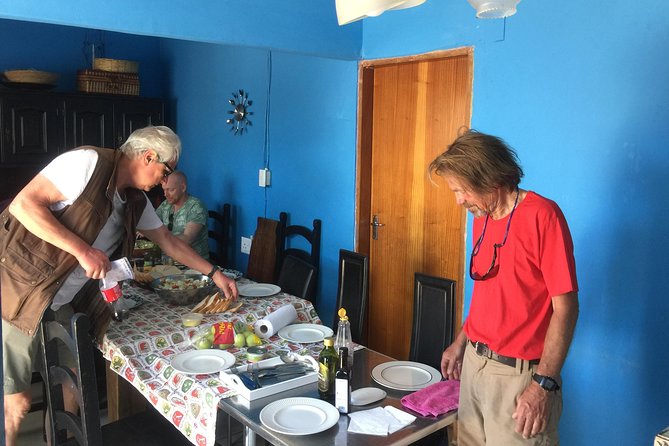
The tour includes teaching about Herero and Himba culture. This is an important part of the experience because Namibia’s identity is shaped by many communities, not one single national tradition.
The wording of the tour details does not promise a separate village visit or a formal costume presentation. Instead, the subject is introduced during the community route and conversations. That makes the material accessible, but you should book this with realistic expectations. You are receiving a compact introduction during a four-hour visit, not an in-depth specialist study.
If you want to understand more, use the walking time to ask Nande direct questions. A private tour is particularly useful here because the pace can respond to your interests. You can ask about language, family life, food, or the relationship between cultural identity and modern township life.
Schools, kindergartens, and the need for respectful contact
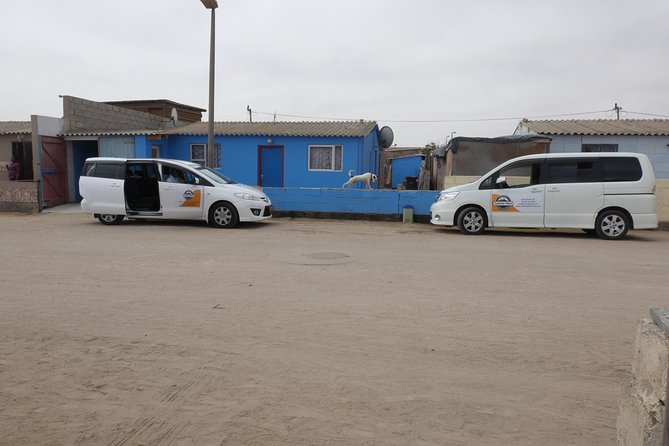
A stop at schools and a kindergarten is included, with time spent with children in the community. This can be a moving part of the day, but it also requires the most care.
Children may be interested in visitors, and the tour asks you to bring sweets. Even so, do not hand out treats without asking the guide or school staff first. Local adults know what is appropriate and whether a visit fits the school’s routine. The same applies to photographs. Never assume that a child’s smile is permission for a picture.
The value of this stop is the chance to see community life beyond markets and tourist services. The drawback is that schools are working environments, and access can vary. If a class is busy or a visit is not suitable that day, the stop may be brief or adjusted.
Your guide’s role is especially important here. Follow Nande’s instructions, keep your behavior low-key, and remember that children should not be expected to entertain you.
Arts, crafts, and the people who make them
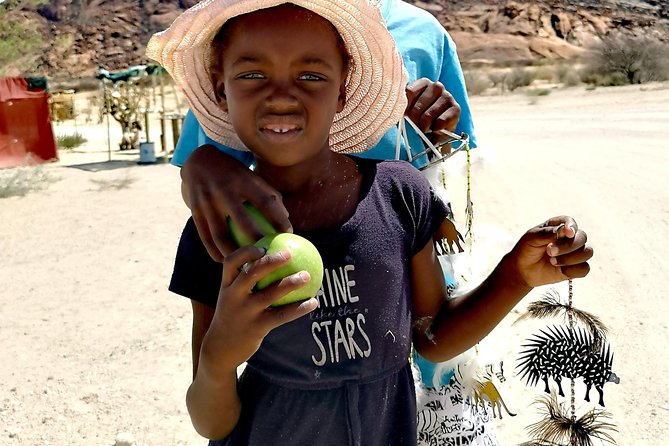
The community arts and crafts projects offer a practical look at local creativity and income. You visit the craft center and may be taught more about the work being made there.
This stop has clear value if you want to buy a meaningful souvenir. Purchasing directly from a community project can give your money a more immediate purpose than buying a generic item at a hotel shop. Ask what is for sale, how prices are set, and whether photographs are welcome.
The craft visit is also a chance to slow down. After walking through streets and markets, you can focus on the skill behind the objects rather than treating them as quick snapshots. The tour does not specify which crafts will be available, so the selection may depend on the day.
A local tavern and the taste of Namibia

The visit to a local shebeen or tavern includes a local beer with residents. This is one of the tour’s simplest but most revealing stops. Taverns are social places, and sharing a drink can open a more relaxed conversation than a formal presentation.
You do not need to treat the beer stop as a drinking event. It is a chance to sample something local and observe how people gather. If you do not drink alcohol, ask what alternatives are available, since the tour information only specifically mentions local beer.
The stop may feel more spontaneous than a restaurant visit. That is part of its appeal, but it also means conditions can vary. Keep your belongings secure, stay with your guide, and follow local etiquette.
The home-cooked meal and Mondesa choir finale
The family meal is the emotional center of the outing. Food prepared in a local home gives you a direct connection to domestic life and lets you taste dishes that may not appear on a standard hotel menu. The tour specifically mentions local food and mopane worms, but it does not provide a fixed menu.
Tell the provider about dietary needs before the tour. The details do not promise vegetarian, vegan, allergy-safe, or religiously specific meals, so you should not assume that every request can be met.
The final choir performance brings the day to a clear close. Music is a strong way to experience community participation, and ending with local singers gives the tour a sense of occasion. It is also a performance, so approach it with respect. Listen, enjoy the music, and ask before taking close-up photographs.
I like this ending because it connects the tour’s main themes: language, people, food, and shared identity. It is more memorable than ending at a parking area after a series of disconnected stops.
Is $120 good value for two people?
The price is $120 per group of up to two, not $120 per person. For a couple or two friends, that works out to $60 each before any personal purchases or optional spending. Pickup around Swakopmund, a private guide, market visit, cultural instruction, family meal, beer stop, craft project, and choir performance are included in that price.
The value depends on what you want from Swakopmund. If your priority is a low-cost sightseeing loop or a tightly timed attraction, this may feel expensive. If you want direct contact with local residents and prefer a private format, the price is easier to justify.
There is also a practical reason to value the private setup. You can ask more questions, adjust the pace, and spend longer on the parts that interest you. With only your own group participating, the experience should feel more personal than a large coach excursion.
That benefit makes punctuality especially important. One direct account describes a pickup several hours late and a tour shortened to three hours, with an additional tour being fitted into the day. The current details describe the activity as approximately four hours, while another part of the supplied information refers to five hours. Confirm both the pickup window and planned duration when booking.
Who should book this Mondesa experience?
I would recommend it to you if you want to meet local people, learn about several Namibian cultures, and take part in food, language, music, and market visits. It suits couples, friends, and families who prefer a private half-day to a formal museum tour.
It is also a good fit if you want a cultural activity that stays close to Swakopmund. You do not need to devote a full day to a distant attraction, and hotel pickup makes the plan simple.
I would think twice if you dislike walking, feel uneasy entering residential areas, or want a predictable schedule down to the minute. The tour depends on community settings, and the schedule may need to flex. It is also not the right choice if you expect a full academic treatment of every tribe named.
Tours are conducted in English. French and German-speaking options can be requested at booking, so ask early rather than assuming they will be available on the day.
My booking advice for a smoother day
Confirm the start time, pickup location, expected duration, and language before you pay. The stated start time is 10:00 a.m., but the tour also offers morning and afternoon departures, so make sure your reservation shows the option you want.
Bring comfortable walking shoes, a phone or camera, and an open attitude toward unfamiliar food. Ask before taking photographs, especially at the school, kindergarten, market, and family home. If you plan to bring sweets for children, check with Nande or the relevant adults first.
The tour requires good weather and a minimum number of participants. If poor weather or low numbers force cancellation, you are offered another date or experience, or a full refund. You can cancel for a full refund up to 24 hours before the start time, but changes or cancellations inside that window are not accepted.
Should you book Explorer Historical Private Township Cultural Tours?
Book it if your best Namibia memories come from conversations, shared food, music, and seeing how people live rather than from monuments alone. The Damara language lesson, family meal, local beer, and Mondesa choir make this more than a drive-by township visit.
Book with care if your schedule is tight. The report of a late pickup and shortened outing is the one serious concern, and the conflicting four-hour and five-hour descriptions make a timing check worthwhile. If Explorer Cultural Township Tours confirms the schedule clearly, the private $120 price for two offers a thoughtful way to meet Mondesa and learn more about Namibia beyond Swakopmund’s tourist center.
FAQ
Where does this cultural tour take place?
The experience takes place in Mondesa Township, with pickup offered from accommodations in and around Swakopmund.
How long does the tour last?
The current duration is approximately four hours. Another detail describes a five-hour tour, so confirm the expected length when booking.
What time does the tour start?
The listed start time is 10:00 a.m. Morning and afternoon departure options are available.
Is hotel pickup included?
Yes. Pickup is offered from accommodations in and around Swakopmund.
Is this a private tour?
Yes. Only your group participates, and the price covers up to two people.
How much does the tour cost?
The listed price is $120 per group of up to two people.
What language is the tour conducted in?
The tour is conducted in English. French and German-speaking options are available by request at booking.
Will I learn the Damara click language?
Yes. The tour includes a lesson in the click language associated with the Damara people.
Is food included?
Yes. A local meal prepared at a family home is included. The available information does not provide a fixed menu.
What happens if the tour is canceled?
If poor weather or an insufficient number of participants causes cancellation, you are offered another date or experience, or a full refund. You can also cancel at least 24 hours before the start time for a full refund.
More Historical Tours in Swakopmund
- City Tour of Historical Swakopmund
★ 5.0 · 8 reviews - Half Day Swakopmund Cultural Historical Township Tour
★ 5.0 · 4 reviews - Half-Day Windhoek City and Township Cultural Tour
★ 4.5 · 187 reviews - From Walvis Bay: Sandwich Harbour World Heritage Site
★ 4.8 · 134 reviews
Just added around Swakopmund
- Walvis Bay Shore Excursion: Flamingos, Dune 7, Swakopmund★ 5.0 · 3 reviews
- Unforgettable Half Day Adventure, Explore Sandwich Harbour★ 5.0 · 3 reviews
- Swakopmund Explorer Township Tour in Mondesa with Nande the Township Local Guide★ 5.0 · 4 reviews
- Walvisbay Dune 7 and Swakopmund Town Half Day Guided Tour★ 4.0 · 4 reviews
- Half Day Swakopmund Cultural Historical Township Tour★ 5.0 · 4 reviews
- Spitzkoppe – Day Tour to the Spitzkoppe Mountain from Swakopmund★ 5.0 · 3 reviews
- Full-Day Tour in Namib Desert from Swakopmund, Namibia★ 5.0 · 3 reviews
- 2h30min Explorer Quad Bike Tour★ 5.0 · 6 reviews
Windhoek Township Tours, compared.
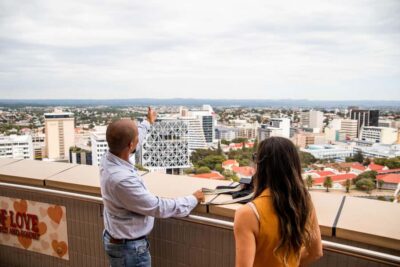
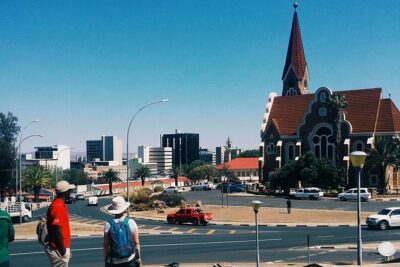
Half-Day Windhoek City and Township Cultural Tour
Read our review →
Katutura Tour – Experience Genuine Namibian Life
Read our review →
Swakopmund Best Cultural Historical Township Tours Namibia
Read our review →Browse the lists this tour appears in